Florida short-term rental laws (2026)
Short-term rentals are legal across Florida, and state law stops cities and counties from banning them. A local ordinance cannot prohibit vacation rentals or limit how often they are rented unless it dates from June 1, 2011 or earlier. The state, through the DBPR, licenses any whole unit rented more than three times a year for stays under 30 days. Renting a room in your own home needs no state license. There is no primary-residence rule and no night cap, but an unlicensed vacation rental is a second-degree misdemeanor, fined up to $1,000 per offense.[3]
Every rule below links to the official source it comes from, verified September 14, 2026.
Is Airbnb legal in Florida?
Legal, with a state license
Whole units rented more than three times a year need a state license. Local rules after June 1, 2011 cannot ban them.
8 official sources · verified September 14, 2026
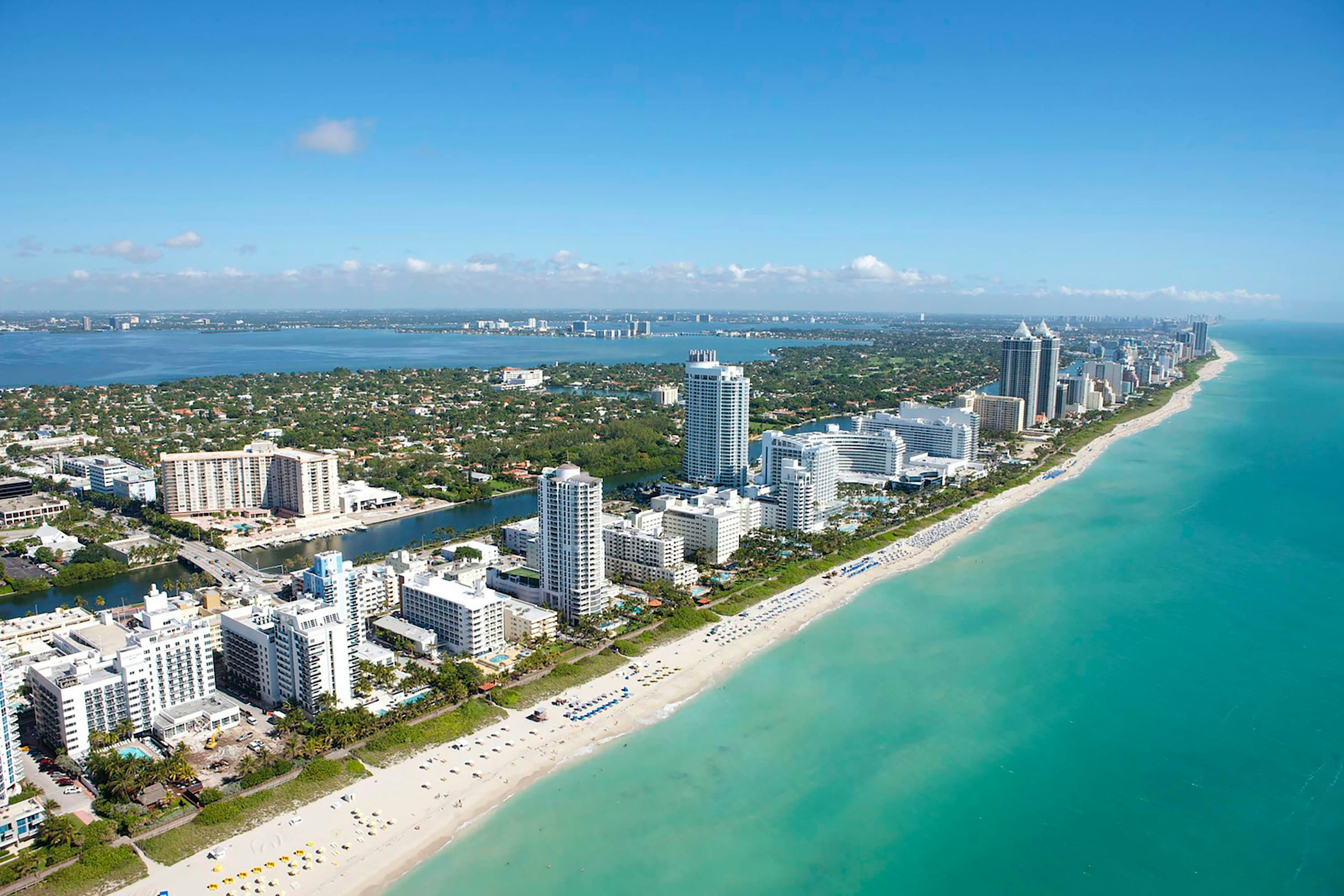
Photo: Antonio Cuellar on Unsplash
- PermitRequired · State license, $170 a year
- Primary residenceNot required
- Number on listingNot required
- Night capNone published by the state
Every Florida rule, sorted by what it asks
Filter by topic. Each line carries the number of its official source, listed at the bottom of the page.
You must
- Hold a DBPR license for whole-unit stays under 30 days, over 3 times a year[1]
- Hold a license if you advertise a whole unit as regularly rented[1]
- Report address or unit count changes within 30 days[4]
- Renew every year by your district's renewal date[1]
- Check city and county rules, which may still apply[1][2]
- Have smoke detectors in every living unit and meet NFPA 101[1]
- 3+ stories: file a balcony certificate every 3 years, not condo common elements[1]
- Open the rental to DBPR on request[3]
- Get a Florida sales tax number, or proof of exemption, before you apply[2]
- Collect 6% state sales tax and county surtax on stays of 6 months or less[7]
You must not
Not required
- A DBPR license for renting rooms, not the whole unit[1]
- A state night cap[1]
- Showing the state license number in listings[1][4]
- Primary residence[1]
- Being on site during stays[1]
- Routine DBPR lodging inspections[3]
- A state insurance minimum[1]
- Collecting 6% state tax and county surtax yourself on Airbnb[8]
Cities in this state
Short-term rental rules in 33 Florida cities
Ranked by the share of housing the Census counts as seasonal. Each city page carries its own rules, its tax stack and its census figures.
| City | County | City rule | Primary residence | Seasonal homes per 1,000 | Seasonal homes |
|---|---|---|---|---|---|
| Panama City Beach | Bay | Registration required | Not required | 527 | 11,177 |
| Indian Shores | Pinellas | No city ordinance | Not required | 512 | 1,315 |
| Longboat Key | Manatee and Sarasota | Allowed by zone | Not published | 496 | 4,927 |
| Marco Island | Collier | No city ordinance | Not required | 492 | 9,100 |
| Fort Myers Beach | Lee | Registration required | Not required | 481 | 4,753 |
| Lauderdale-by-the-Sea | Broward | Registration required | Not required | 458 | 3,163 |
| Bradenton Beach | Manatee | Registration required | Not required | 416 | 776 |
| Naples | Collier | Allowed by zone | Not published | 408 | 7,707 |
| Destin | Okaloosa | Registration required | Not required | 367 | 5,021 |
| Sunny Isles Beach | Miami-Dade | Permit required | Not required | 367 | 7,208 |
| Ponce Inlet | Volusia | Allowed by zone | Not required | 366 | 1,169 |
| Anna Maria | Manatee | Registration required | Not published | 344 | 517 |
| Holmes Beach | Manatee | Registration required | Not published | 309 | 1,367 |
| St. Augustine Beach | St. Johns | Capped | Not required | 302 | 1,377 |
| Bonita Springs | Lee | Registration required | Not required | 298 | 11,877 |
| Treasure Island | Pinellas | Allowed by zone | Not published | 288 | 1,781 |
| St. Pete Beach | Pinellas | Registration required | Not published | 286 | 2,406 |
| Madeira Beach | Pinellas | Allowed by zone | Not published | 286 | 1,143 |
| Cedar Key | Levy | Registration required | Not required | 283 | 225 |
| Indian Rocks Beach | Pinellas | Registration required | Not required | 249 | 851 |
| Cocoa Beach | Brevard | Registration required | Not published | 248 | 2,242 |
| Key Biscayne | Miami-Dade | Registration required | Not required | 238 | 1,736 |
| Marathon | Monroe | Capped | Not required | 234 | 1,522 |
| Cape Canaveral | Brevard | Registration required | Not required | 230 | 2,125 |
| Miami Beach | Miami-Dade | Allowed by zone | Not published | 212 | 13,380 |
| Crystal River | Citrus | Allowed by zone | Not required | 181 | 413 |
| Flagler Beach | Flagler | Permit required | Not required | 170 | 629 |
| Deerfield Beach | Broward | Registration required | Not required | 158 | 7,371 |
| Fernandina Beach | Nassau | Allowed by zone | Not required | 149 | 1,217 |
| Key West | Monroe | Capped | Not published | 148 | 2,161 |
| Port St. Joe | Gulf | Registration required | Not required | 148 | 323 |
| Pompano Beach | Broward | Permit required | Not required | 133 | 8,149 |
| Dunedin | Pinellas | Registration required | Not required | 124 | 2,643 |
What a new permit costs
Fees for a single rental unit licensed for a full year
$230new application
- Application$50
- Education program$10
- License$170
- License fee, single unit, half year$90
- License fee, 2 to 25 units$180
- License fee, 2 to 25 units, half year$95
- Collective license base fee, plus $10 a unit$150
Each yearly renewal costs the $10 education fee plus the full-year license fee.[1]
How to apply in Florida
Official name: Vacation rental license (DBPR Division of Hotels and Restaurants)
- 1
Register with the Florida Department of Revenue to collect and remit tax on your rentals.[7]
- 2
Create a DBPR Online Services account, which you use to submit and update rental addresses.[1]
- 3
Choose the license type, Condominium or Dwelling, and the class: Single, Group or Collective.[1]
- 4
Apply online with every rental address and pay the $50 application fee, the $10 education fee and the license fee.[1]
- 5
DBPR usually processes online applications in one to two business days and emails the license.[1]
- 6
Display the license, or a copy, in a conspicuous place at the rental.[1]
Four jurisdictions, same questions
The Florida column comes from the official sources on this page. The other columns show the headline rule from each WonderGuest page. Open a page for the full detail.
| Question | Florida | Austin | San Bernardino County | Houston |
|---|---|---|---|---|
| Permit | RequiredState license, $170 a year | Required$836.30 new, up to 2 years | Required$1,144 new, 1 year | Required$275 a year plus administrative fee |
| Primary residence | Not required | Not required | Not required | Not required |
| Night cap | None published by the state | None published | None published | None published |
| Number on listing | Not required | Required | Required | Required |
| Where allowed | No local bans after June 1, 2011 | Every zoning district | Mountain and Desert Regions only | Inside city limits, within HOA rules |
| Occupancy tax | 6% state tax, Airbnb collects | 11% city tax, platforms collect | 7% county TOT, Airbnb collects | 7% city hotel tax, paid quarterly |
| Fine without permit | Second-degree misdemeanor | Up to $500 per offense, per day | $1,000 per violation per day | $100 to $500 per violation per day |
| Austin rules | San Bernardino County rules | Houston rules |
Coming up
What's changing
No change with an effective date appears in the official sources on this page as of September 14, 2026.
FAQ
Florida short-term rental questions
What are the rules for Airbnb in Florida?
Can a Florida city or county ban Airbnb rentals?
Are there new vacation rental laws in Florida in 2026?
What happens if I host in Florida without a vacation rental license?
Sources
- Guide to vacation rentals and timeshare projects, Florida DBPR, Division of Hotels and Restaurants, read on September 14, 2026
- Application packet for vacation rental license (HR-7028), Florida DBPR, read on September 14, 2026
- Section 509.032, Florida Statutes (2026), The Florida Senate, read on September 14, 2026
- Section 509.241, Florida Statutes (2026), The Florida Senate, read on September 14, 2026
- Section 509.261, Florida Statutes (2026), The Florida Senate, read on September 14, 2026
- HB 79 (2026), water safety requirements for rental property, The Florida Senate, read on September 14, 2026
- Sales and use tax on rental of living or sleeping accommodations (GT-800034), Florida Department of Revenue, read on September 14, 2026
- Occupancy tax collection and remittance in Florida, Airbnb Help Center, read on September 14, 2026
This page is not legal advice. It summarizes the official sources listed on this page as they read on September 14, 2026. Rules can change after that date, so check with the issuing office before you apply or publish a listing.
Before you list
Free tools for new hosts
Short-term rental agreement generator
Parties, dates, rent, deposit checked against your state's cap, and the house rules clauses you enforce. A signed-ready PDF for direct and Vrbo bookings.
Airbnb house rules
Generate a complete PDF house rules document for your property: rules, schedule, amenities, emergency contacts.
Rental arbitrage calculator
Rent, deposit, furnishing, nightly rate and occupancy. You get monthly cash flow, the occupancy you break even at, and how long the setup takes to pay back.
Check-in instructions
The message a guest reads before getting in: access, keys, WiFi, parking, contact. English or bilingual output.