Chicago short-term rental laws (2026)
Chicago calls them shared housing units, and each one needs an approved city registration before it is listed or rented for 31 days or fewer. They are legal citywide except in Restricted Residential Zones, precincts where a quarter of registered voters petitioned to keep them out. In a single-family home or a building of two to four units, the unit has to be your primary residence, where you live at least 245 days a year. In a building of five or more units, it does not. Violations cost $2,500 to $10,000 per offense, and on June 23, 2026 the city sued Airbnb over bookings for unregistered units.[3]
Every rule below links to the official source it comes from, verified September 14, 2026.
Is Airbnb legal in Chicago?
Legal, with a city registration
Outside Restricted Residential Zones, with a City registration. In buildings of 1 to 4 units, only your primary residence.
12 official sources · verified September 14, 2026
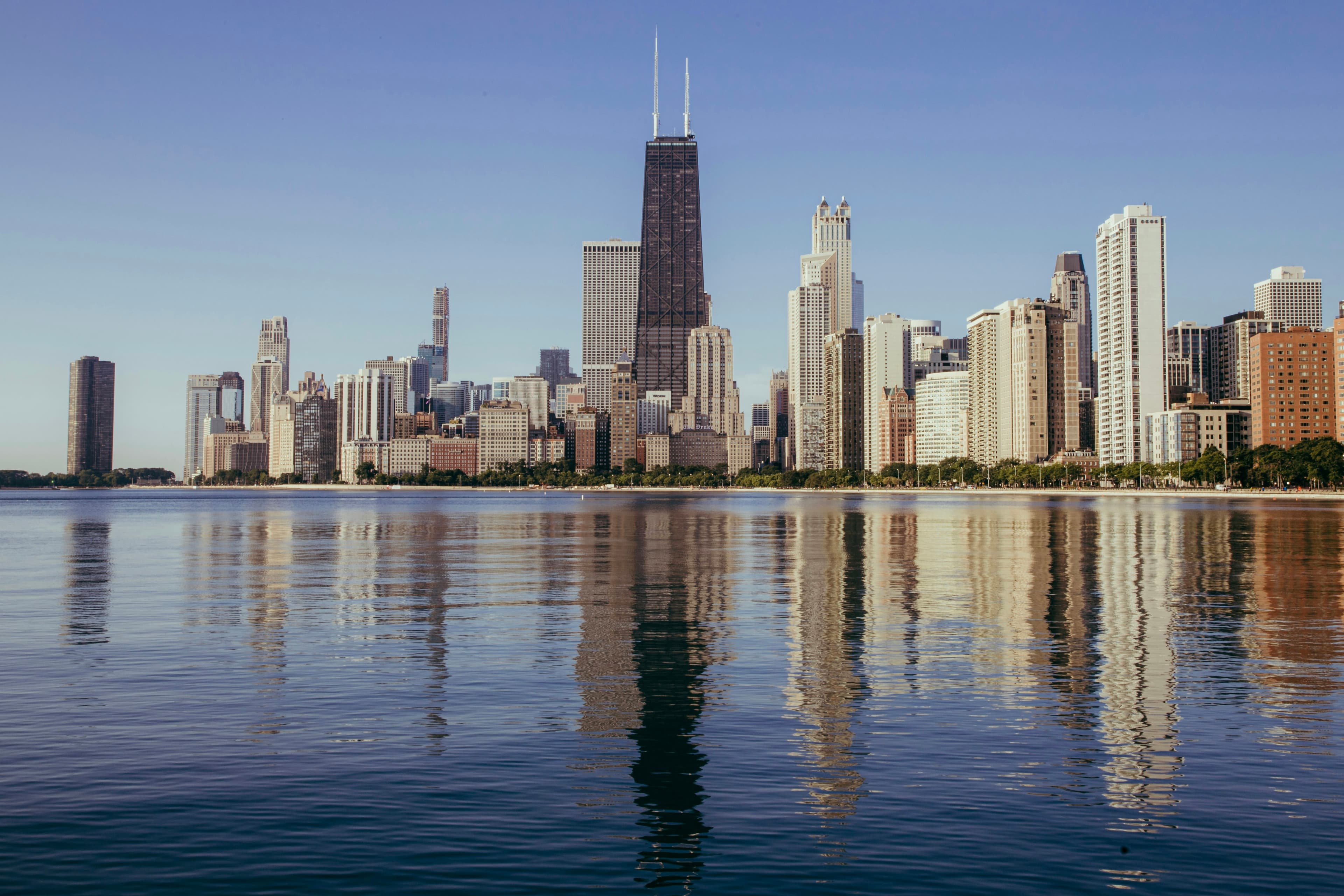
Photo: stephan cassara on Unsplash
- PermitRequired · $250 registration, 1 year
- Primary residenceVaries
- Number on listingRequired
- Night capNone published
Every Chicago rule, sorted by what it asks
Filter by topic. Each line carries the number of its official source, listed at the bottom of the page.
You must
- Get an approved registration for each unit before you list or rent it[1][3]
- Hold an operator license, issued to individuals, for 2 or more registrations[4]
- Show your registration number on your listing[3]
- List only on platforms named in your application, or get written BACP approval[5]
- Renew every year on the portal and pay the $250 fee again[3]
- Prove primary residence with an Illinois ID plus one recent document[5]
- Single-family or 2 to 4 unit building: rent only your primary residence[2]
- Live there at least 245 days a year when it must be your primary residence[9]
- Rent a legal dwelling unit with six or fewer sleeping rooms[2]
- Remit the 4.5% tax and 6% surcharge yourself on direct bookings[1]
You must not
- Advertise or rent the unit while your application or appeal is pending[3]
- Have more than one host approved for the same unit[5]
- Rent in a Restricted Residential Zone[3][8]
- Rent a unit on the Prohibited Buildings, Scofflaw or Problem Landlord lists[3]
- List a unit if your lease or HOA bans short-term shared housing[2]
- Run more than one rental in a single-family home or 2 to 4 unit building[2]
- 5 or more units: exceed a quarter of units or 6, whichever is less[2]
- Exceed the lowest of 2 adults per guest room, 1 per 125 sq ft, or code limit[7]
- Have one egregious incident or two of illegal activity within 12 months[3]
Not required
- A registration for online stays of 32 days or more[3]
- A yearly night cap[3]
- Primary residence in a building of 5 or more units[2]
- Stopping at once if a new restricted zone covers your unit[8]
- Being on site during stays[3]
- A city insurance minimum[3]
- Remitting the city tax and surcharge on licensed platforms[1]
What a new permit costs
Registration fee per unit, paid after BACP approves the application
$250yearly registration
- Registration$250
- Renewal, each year$250
- Operator license, 2 or more registrations$500
How to apply in Chicago
Official name: Shared Housing Unit Registration
- 1
Check eligibility against BACP's criteria, including building type, Restricted Residential Zones and the Prohibited Buildings List.[1]
- 2
Create a Shared Housing Registration Portal account in your legal name and upload a valid ID.[1]
- 3
Submit the application, with two primary residency documents if the unit is your primary residence.[1]
- 4
Once approved, pay the $250 fee on the portal. Your number then appears under My Registration Numbers.[1]
- 5
List the unit only on the platforms named in your approval letter, with the new registration number.[1]
Four jurisdictions, same questions
The Chicago column comes from the official sources on this page. The other columns show the headline rule from each WonderGuest page. Open a page for the full detail.
| Question | Chicago | Florida | Austin | San Bernardino County |
|---|---|---|---|---|
| Permit | Required$250 registration, 1 year | RequiredState license, $170 a year | Required$836.30 new, up to 2 years | Required$1,144 new, 1 year |
| Primary residence | Varies | Not required | Not required | Not required |
| Night cap | None published | None published by the state | None published | None published |
| Number on listing | Required | Not required | Required | Required |
| Where allowed | Outside Restricted Residential Zones | No local bans after June 1, 2011 | Every zoning district | Mountain and Desert Regions only |
| Occupancy tax | 4.5% city tax plus 6% surcharge | 6% state tax, Airbnb collects | 11% city tax, platforms collect | 7% county TOT, Airbnb collects |
| Fine without permit | $2,500 to $10,000 per offense | Second-degree misdemeanor | Up to $500 per offense, per day | $1,000 per violation per day |
| Florida rules | Austin rules | San Bernardino County rules |
Coming up
What's changing
No change with an effective date appears in the official sources on this page as of September 14, 2026.
FAQ
Chicago short-term rental questions
Are short-term rentals allowed in Chicago?
Why is the City of Chicago suing Airbnb?
Do you have to live in your Chicago short-term rental?
What is a Restricted Residential Zone in Chicago?
How much does a Chicago shared housing registration cost?
Sources
- Shared housing registration: common eligibility criteria, City of Chicago Department of Business Affairs and Consumer Protection, read on September 14, 2026
- Short-term shared housing registration guide (2026), City of Chicago Department of Business Affairs and Consumer Protection, read on September 14, 2026
- Shared Housing Unit Operator licensing guide (2026), City of Chicago Department of Business Affairs and Consumer Protection, read on September 14, 2026
- Shared housing registration rules (effective September 19, 2024), City of Chicago Department of Business Affairs and Consumer Protection, read on September 14, 2026
- Shared housing internet platforms, City of Chicago Department of Business Affairs and Consumer Protection, read on September 14, 2026
- Shared Housing Reform Ordinance SO2020-3986, City of Chicago, read on September 14, 2026
- House sharing FAQ (Restricted Residential Zones), Office of the City Clerk, City of Chicago, read on September 14, 2026
- Active shared housing registrations, City of Chicago Data Portal, read on September 14, 2026
- City of Chicago sues Airbnb and high-volume host (June 23, 2026), City of Chicago Department of Law, read on September 14, 2026
- Occupancy tax collection and remittance in Illinois, Airbnb Help Center, read on September 14, 2026
This page is not legal advice. It summarizes the official sources listed on this page as they read on September 14, 2026. Rules can change after that date, so check with the issuing office before you apply or publish a listing.
Before you list
Free tools for new hosts
Short-term rental agreement generator
Parties, dates, rent, deposit checked against your state's cap, and the house rules clauses you enforce. A signed-ready PDF for direct and Vrbo bookings.
Airbnb house rules
Generate a complete PDF house rules document for your property: rules, schedule, amenities, emergency contacts.
Rental arbitrage calculator
Rent, deposit, furnishing, nightly rate and occupancy. You get monthly cash flow, the occupancy you break even at, and how long the setup takes to pay back.
Check-in instructions
The message a guest reads before getting in: access, keys, WiFi, parking, contact. English or bilingual output.