Charleston short-term rental laws (2026)
Charleston allows short-term rentals almost only in the owner's own home. Where the home sits decides the rest. The peninsula adds a test on the building itself, and the areas off it do not.[5]
Every rule below links to the official source it comes from, verified September 14, 2026.
Is Airbnb legal in Charleston?
Legal, in your primary residence
In your full-time primary residence at the 4% Legal Residence rate. Commercially zoned properties in the overlay are the exception.
15 official sources · verified September 14, 2026
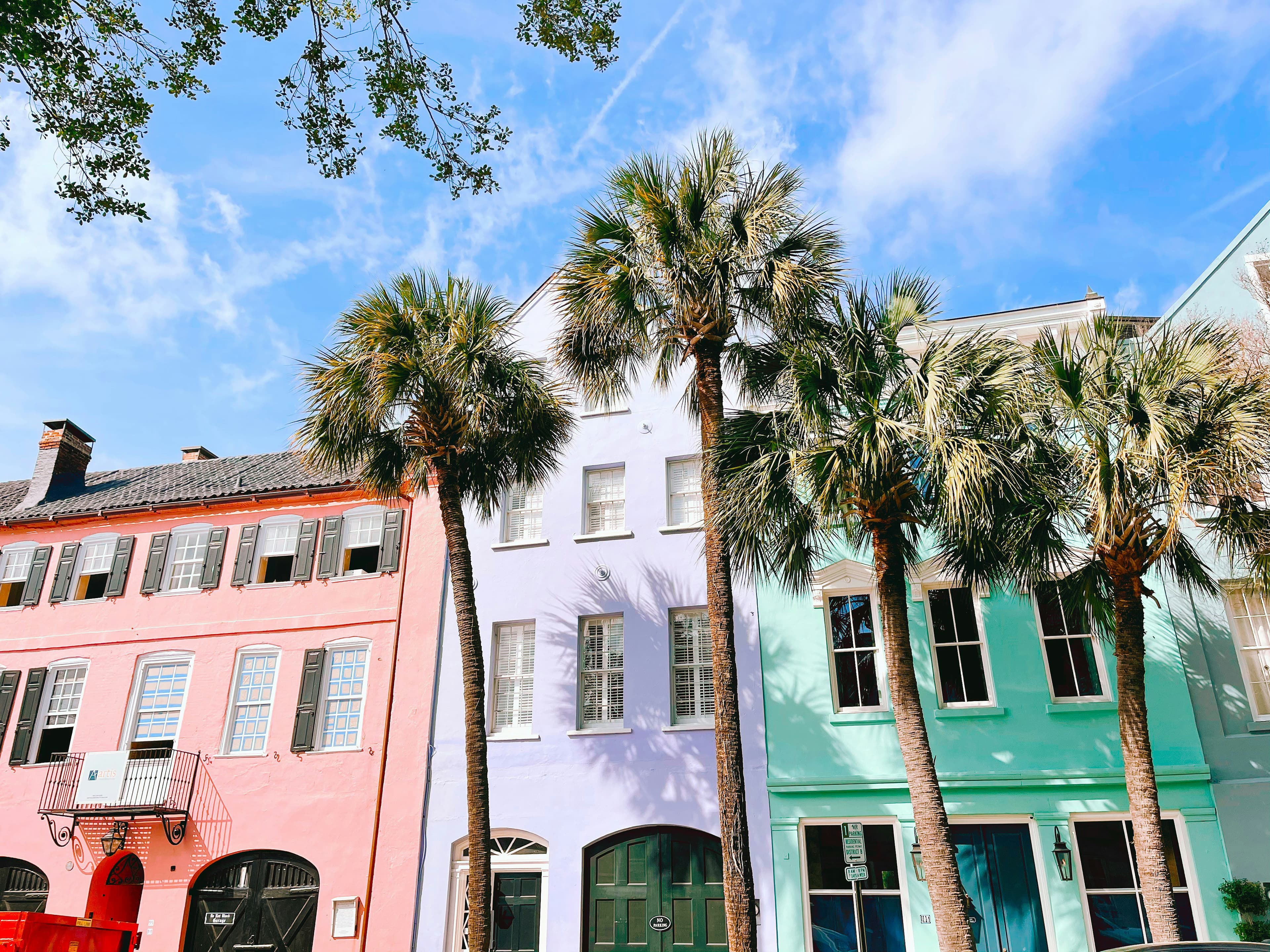
Photo: Tyrone Sanders on Unsplash
- PermitRequired · $345 review fee plus other fees
- Primary residenceRequired
- Number on listingRequired
- Night capNone published
Charleston short-term rental permit
Charleston grants short-term rental permits almost only for the home you live in, and sorts them by where that home sits. On the peninsula, the building has to be individually listed on the National Register in the Old and Historic District. Elsewhere on the peninsula, it has to be at least 50 years old. Off the peninsula, in West Ashley or on Daniel Island, there is no age test. In every category, you live in the home at least 183 days a year, at the 4% Legal Residence rate. You sleep on site during stays. The review fee is $345, plus other fees. The one exception is the Short Term Rental Overlay in Cannonborough-Elliotborough, where a commercially zoned investment property can qualify.[5]
Every Charleston rule, sorted by what it asks
Filter by topic. Each line carries the number of its official source, listed at the bottom of the page.
You must
- Residential: qualify for the County's 4% Legal Residence tax rate[6][5]
- Put the last 5 digits of your Operational Permit number in the listing[6]
- Renew every year before the Certificate of Operation expires[6]
- Residential: own the property and live there at least 183 days a year[6]
- Category 1: rent only a building individually listed on the National Register[1]
- Category 2: rent only a building at least 50 years old[2]
- Provide one extra off-street parking space for the rental[3]
- Residential: operate it yourself and sleep on site while guests are there[6]
- Answer the phone 24 hours a day, yourself or through an emergency contact[6][7]
- Keep a guest register with names, addresses and dates[6]
- Pass a fire safety inspection, with a self-survey and smoke alarm records[6]
- Allow City staff to inspect the rental for zoning and fire code compliance[6]
- Residential: carry at least $1,000,000 in general liability per occurrence[6]
- Collect accommodations tax, or risk a $500 to $2,000 penalty per 7 days rented[5]
You must not
- Advertise or operate without a Certificate of Operation and business license[6]
- Transfer approvals to a new owner[6]
- Reestablish a revoked permit within 24 months[5]
- Rent an investment property, unless commercially zoned in the overlay[5]
- Rent more than one short-term rental unit per property[6]
- Host more than 4 adults overnight in a residential rental[5]
- Commercial rentals: exceed 4 unrelated people or 1 family at a time[7]
Not required
Stays of 30 days or more in Charleston
- Charleston keeps short-term rentals to the home you live in. A stay of 30 consecutive days or more is not a short-term rental under its rules.[8]
- At that length, a guest can gain tenant rights, and lodging tax and insurance work differently.
What a new permit costs
Zoning fee for applications filed since January 1, 2024, plus Fire Marshal fees
$450.22zoning and fire fees
- Zoning review$345
- Fire Marshal application$40
- Fire plan review$32.61
- Fire inspection$32.61
A City business license adds a $64 base fee plus $3.90 per additional $1,000 of expected income.[4]
How to apply in Charleston
Official name: Short Term Rental Operational Permit and Certificate of Operation, plus a City business license
- 1
Confirm the three eligibility tests: primary residence at the 4% rate, your Category's requirements and the required parking.[5]
- 2
Send the Short Term Rental Certificate form to the Charleston County Assessor, or get a letter from the Berkeley County Assessor.[6]
- 3
File the notarized application with a site plan, floor plans, exterior photos, your driver's license, a fire self-survey and the zoning fee.[6]
- 4
The property is posted for 15 calendar days during zoning review, followed by a five business day appeal period.[6]
- 5
After Fire Marshal review, schedule the fire safety inspection through your Customer Self Service account.[6]
- 6
Pay the remaining fees to receive the business license and Certificate of Operation. You cannot advertise or rent before then.[6]
Five jurisdictions, same questions
The Charleston column comes from the official sources on this page. The other columns show the headline rule from each WonderGuest page. Open a page for the full detail.
| Question | Charleston | Kiawah Island | North Myrtle Beach | Folly Beach | Hilton Head Island |
|---|---|---|---|---|---|
| Permit | Required$345 review fee plus other fees | Required$200 | Required | Required$245 | Required$150 |
| Primary residence | Required | Not published | Not published | Varies | Not published |
| Night cap | None published | None published, 14 days a year or less is exempt | None published | 72 nights a year on an owner-occupied license | None published |
| Number on listing | Required | Required | Not published | Required | Required |
| Occupancy tax | 14.0% combined in Charleston County | 13% | 12% | 14% | 10% |
| Kiawah Island short-term rental rules | North Myrtle Beach short-term rental rules | Folly Beach short-term rental rules | Hilton Head Island short-term rental rules |
Coming up
What's changing
No change with an effective date appears in the official sources on this page as of September 14, 2026.
FAQ
Charleston short-term rental questions
Can you have an Airbnb in Charleston, SC?
Do I have to be home while guests stay in my Charleston rental?
How do I show my Charleston permit number on Airbnb or Vrbo?
Will hosting affect my 4% property tax rate in Charleston?
Does South Carolina tax short-term rentals?
Sources
- Short term rental Category 1, City of Charleston, read on September 14, 2026
- Short term rental Category 2, City of Charleston, read on September 14, 2026
- Short term rental Category 3, City of Charleston, read on September 14, 2026
- Short term rental applicable fees, City of Charleston, read on September 14, 2026
- Short term rentals FAQ (August 31, 2021), City of Charleston, read on September 14, 2026
- Residential short term rental application (December 7, 2023), City of Charleston Department of Planning, Preservation and Sustainability, read on September 14, 2026
- Commercial short term rental application (December 7, 2023), City of Charleston Department of Planning, Preservation and Sustainability, read on September 14, 2026
- Accommodations tax for short term rentals, City of Charleston Revenue Collections, read on September 14, 2026
- Short term rental enforcement, City of Charleston, read on September 14, 2026
- Planning Commission agenda packet, July 15, 2026, City of Charleston Planning Commission, read on September 14, 2026
- Accommodations tax, South Carolina Department of Revenue, read on September 14, 2026
- Occupancy tax collection and remittance in South Carolina, Airbnb Help Center, read on September 14, 2026
- Extended Home Rental permit application packet (July 2026), Charleston County Zoning and Planning Department, read on September 14, 2026
- Short term rentals permit, City of North Charleston, read on September 14, 2026
- Short-term rentals, Town of Mount Pleasant, read on September 14, 2026
This page is not legal advice. It summarizes the official sources listed on this page as they read on September 14, 2026. Rules can change after that date, so check with the issuing office before you apply or publish a listing.
Before you list
Free tools for new hosts
Short-term rental agreement generator
Parties, dates, rent, deposit checked against your state's cap, and the house rules clauses you enforce. A signed-ready PDF for direct and Vrbo bookings.
Airbnb host fee calculator
What Airbnb takes on a booking under the 15.5% host-only fee or the old split fee, what the guest pays on top, and the payout that reaches you.
Airbnb income calculator
Nightly rate, occupancy, Airbnb fee, management, mortgage, taxes and depreciation. You get cash flow, cash-on-cash return and what is left after the IRS.
Airbnb house rules
Generate a complete PDF house rules document for your property: rules, schedule, amenities, emergency contacts.