Arizona short-term rental laws (2026)
Arizona settled the question at state level. No city can ban short-term rentals, and no town can either. A city may still regulate them, only in the ways the statute itself lists.[1]
Every rule below links to the official source it comes from, verified October 1, 2026.
Is Airbnb legal in Arizona?
Legal, and cities are boxed in
No Arizona city may ban short-term rentals. It may require a permit, but the fee stops at $250. The form may ask for only six things.
2 official sources · verified October 1, 2026
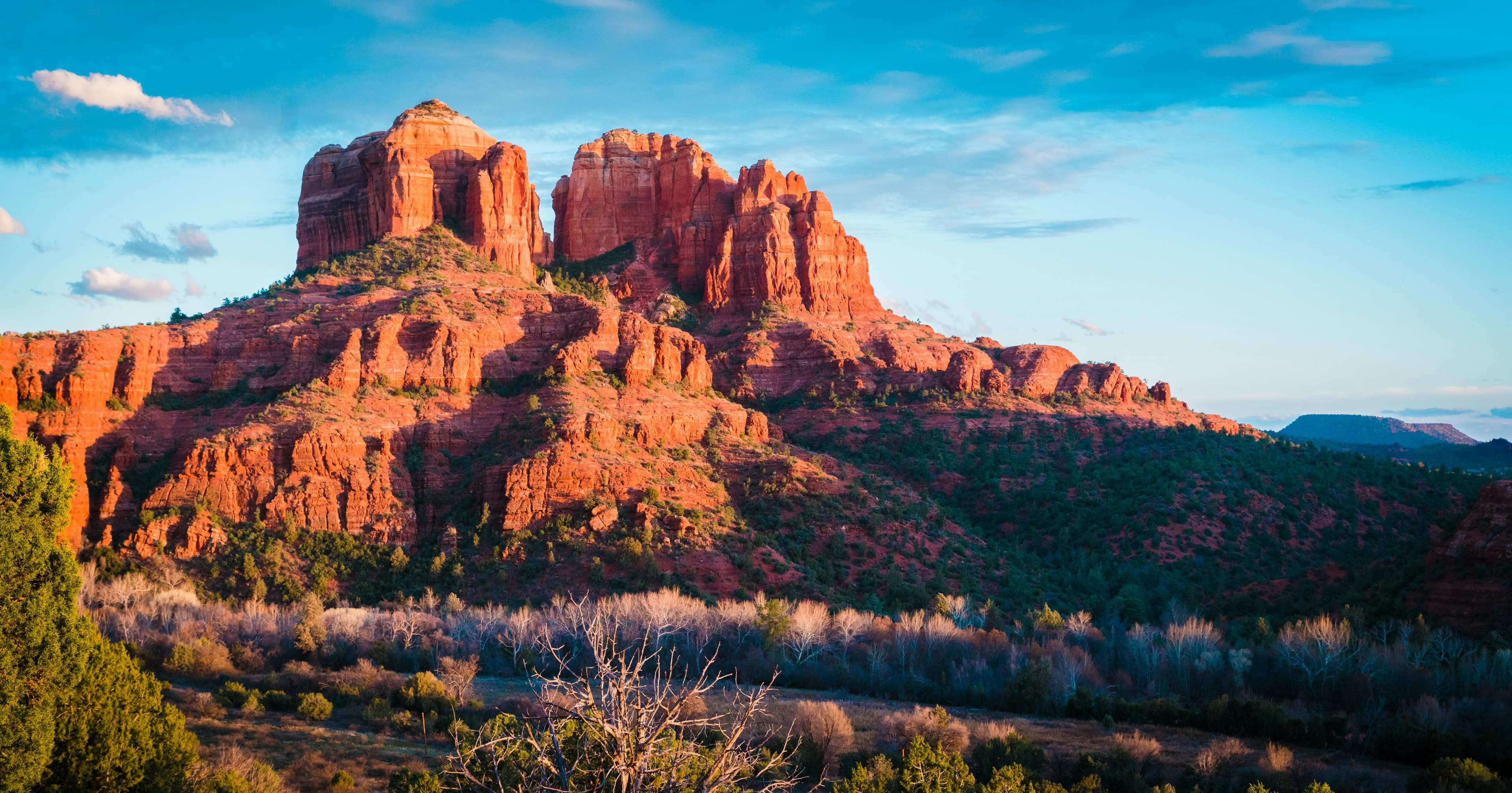
Photo: Kaileen Fitzpatrick on Unsplash
- PermitRequired · Local permit where the city has one, $250 at most
- Primary residenceVaries
- Number on listingRequired
- Night capNone the statute allows a city to set
Arizona short-term rental laws
Arizona took the decision away from its cities. Under A.R.S. § 9-500.39, no city or town may prohibit vacation rentals or short-term rentals. Nor may it restrict them by classification, use or occupancy, beyond a short closed list. That list is what a city can still ask of you. It may protect health and safety. It may zone. It may require emergency contact details and a local permit, with the fee capped at $250. It may also require notice to the neighbors before the first booking, and the permit number on your advertisements. It may demand $500,000 of liability insurance, or equal coverage through a booking platform. Where the home has an accessory dwelling unit approved on September 14, 2024 or later, it may require the owner to live there. Anything outside the list is preempted.[1]
Every Arizona rule, sorted by what it asks
Filter by topic. Each line carries the number of its official source, listed at the bottom of the page.
You must
- Give the city emergency contact details for you or your designee before you offer the property for rent.[1]
- Notify the adjacent, opposite and diagonally opposite properties before the first booking, and file the attestation.[1]
- Hold a state transaction privilege tax license, which the city may ask you to prove.[1]
- Display the local permit or license number on each advertisement, where your city requires one.[1]
- Keep a designee who can answer a complaint or an emergency at any hour, in person if public safety staff require it.[1]
- Carry $500,000 of liability insurance, or list through a marketplace with equal coverage, where your city requires it.[1]
You must not
Occupancy tax in Arizona
- A stay under thirty consecutive days falls in the state's transient lodging classification. From thirty consecutive days it does not.[2]
- Renting four rooms or fewer in an owner-occupied home with breakfast, at an average annual occupancy of fifty percent or less, sits outside the transient lodging classification altogether.[2]
Cities in this state
Short-term rental rules in 25 Arizona cities
Ranked by the share of housing the Census counts as seasonal.
| City | Local rule | Primary residence | Night cap | Seasonal homes per 1,000 |
|---|---|---|---|---|
| Pinetop-Lakeside short-term rental rulesNavajo County, AZ | Permit required | Varies | The permit covers stays of 29 days or less | 333 |
| Show Low short-term rental rulesNavajo County, AZ | Permit required | Varies | None: no Arizona city may cap nights | 296 |
| Carefree short-term rental rulesMaricopa County, AZ | License required | Varies | None, but the whole property must be rented as one | 192 |
| Sedona short-term rental rulesYavapai and Coconino County, AZ | Permit required | Varies | None: no Arizona city may cap nights | 189 |
| Jerome short-term rental rulesYavapai County, AZ | License required | Not published | None: no Arizona city may cap nights | 179 |
| Williams short-term rental rulesCoconino County, AZ | Permit required | Not published | None: no Arizona city may cap nights | 176 |
| Lake Havasu City short-term rental rulesMohave County, AZ | Permit required | Varies | None: no Arizona city may cap nights | 150 |
| Payson short-term rental rulesGila County, AZ | License required | Varies | None: no Arizona city may cap nights | 129 |
| Apache Junction short-term rental rulesPinal County, AZ | No city ordinance | Not published | None: no Arizona city may cap nights | 128 |
| Tombstone short-term rental rulesCochise County, AZ | No city ordinance | Not published | None: no Arizona city may cap nights | 120 |
| Bullhead City short-term rental rulesMohave County, AZ | Permit required | Not published | None: no Arizona city may cap nights | 120 |
| Fountain Hills short-term rental rulesMaricopa County, AZ | Permit required | Varies | None: no Arizona city may cap nights | 119 |
| Bisbee short-term rental rulesCochise County, AZ | License required | Varies | None: no Arizona city may cap nights | 101 |
| Scottsdale short-term rental rulesMaricopa County, AZ | License required | Varies | None: no Arizona city may cap nights | 89 |
| Prescott short-term rental rulesYavapai County, AZ | Registration required | Varies | None, but 2 guests per bedroom plus 2 | 84 |
| Wickenburg short-term rental rulesMaricopa County, AZ | Permit required | Varies | None: no Arizona city may cap nights | 78 |
| Cave Creek short-term rental rulesMaricopa County, AZ | License required | Varies | None: no Arizona city may cap nights | 77 |
| Page short-term rental rulesCoconino County, AZ | License required | Varies | None: no Arizona city may cap nights | 70 |
| Flagstaff short-term rental rulesCoconino County, AZ | License required | Varies | None: no Arizona city may cap nights | 63 |
| Camp Verde short-term rental rulesYavapai County, AZ | No city ordinance | Not published | None: no Arizona city may cap nights | 37 |
| Prescott Valley short-term rental rulesYavapai County, AZ | License required | Varies | None: no Arizona city may cap nights | 32 |
| Cottonwood short-term rental rulesYavapai County, AZ | Registration required | Varies | None: no Arizona city may cap nights | 23 |
| Tempe short-term rental rulesMaricopa County, AZ | License required | Not published | None: state law forbids a city night cap | 15 |
| Tucson short-term rental rulesPima County, AZ | No city ordinance | Not published | None: no Arizona city may cap nights | 15 |
| Phoenix short-term rental rulesMaricopa County, AZ | Permit required | Varies | None: Arizona law bars city night limits | 12 |
How to apply in Arizona
Official name: Local regulatory permit or license, where the city requires one
- 1
Get a state transaction privilege tax license, since the city may ask for proof of compliance with that statute as a condition of its own permit.[1]
- 2
Nominate the person who will answer complaints and emergencies at any hour, in person if public safety staff require it, and give the city their contact details.[1]
- 3
Notify the neighboring properties before the first rental and keep the attestation, which lists the permit number, every address notified and how you notified them.[1]
- 4
Apply for the local permit or license where your city has one, and put its number on every advertisement you maintain.[1]
Five jurisdictions, same questions
The Arizona column comes from the official sources on this page. The other columns show the headline rule from each WonderGuest page. Open a page for the full detail.
| Question | Arizona | California | Colorado | New Mexico | Utah |
|---|---|---|---|---|---|
| Permit | RequiredLocal permit where the city has one, $250 at most | Not requiredNone from the state. City rules vary | RequiredLocal license where your county or town has one | Not requiredState tax ID only, permits are local | Not requiredNone from the state. Cities issue their own |
| Primary residence | Varies | Varies | Varies | Varies | Varies |
| Night cap | None the statute allows a city to set | None in state law | A local option, where adopted | None in state law | None in state law |
| Number on listing | Required | Not required | Not required | Not required | Not required |
| Where allowed | Everywhere: a ban is preempted | Wherever the local ordinance allows it | Set by local rules, bans included | Where the local ordinance allows it | Where the city's zoning allows it |
| Occupancy tax | Transient lodging tax under 30 nights | Local only, on stays of 30 days or less | 2.9% state sales tax, plus local taxes | Local, up to 5% of rent | 1.07% state room tax, plus sales tax |
| Fine without permit | Up to $1,000 a month | Set locally, capped by state law | Listing removed within 7 days of a county notice | Set locally, $500 a day in Albuquerque | Set by each city |
| California short-term rental rules | Colorado short-term rental rules | New Mexico short-term rental rules | Utah short-term rental rules |
Coming up
What's changing
No change with an effective date appears in the official sources on this page as of October 1, 2026.
FAQ
Arizona short-term rental questions
Can an Arizona city ban short-term rentals?
How much can an Arizona city charge for a short-term rental permit?
Do I really have to tell my neighbors before the first booking?
When does a stay stop being a short-term rental for tax purposes?
Sources
- A.R.S. § 9-500.39, Limits on regulation of vacation rentals and short-term rentals; state preemption, Arizona State Legislature, read on October 1, 2026
- A.R.S. § 42-5070, Transient lodging classification; definition, Arizona State Legislature, read on October 1, 2026
This page is not legal advice. It summarizes the official sources listed on this page as they read on October 1, 2026. Rules can change after that date, so check with the issuing office before you apply or publish a listing.
Before you list
Free tools for new hosts
Short-term rental agreement generator
Parties, dates, rent, deposit checked against your state's cap, and the house rules clauses you enforce. A signed-ready PDF for direct and Vrbo bookings.
Airbnb host fee calculator
What Airbnb takes on a booking under the 15.5% host-only fee or the old split fee, what the guest pays on top, and the payout that reaches you.
Airbnb house rules
Generate a complete PDF house rules document for your property: rules, schedule, amenities, emergency contacts.
Check-in instructions
The message a guest reads before getting in: access, keys, WiFi, parking, contact. English or bilingual output.