New York City short-term rental laws (2026)
Short-term rentals are legal in New York City in one form only: the host registers under Local Law 18 and stays in the unit with the guests. Renting out an entire apartment or house for fewer than 30 nights is not allowed. A registered host can take two guests at a time, not counting children under 4, and there is no yearly night cap. Platforms cannot process a booking without a valid registration number, and hosting without one is fined up to $5,000 per transaction.[2]
Every rule below links to the official source it comes from, verified September 14, 2026.
Is Airbnb legal in New York City?
Legal, host on site
With a city registration, in your own home while you stay there, two guests at most. Whole-home rentals under 30 days are not allowed.
13 official sources · verified September 14, 2026
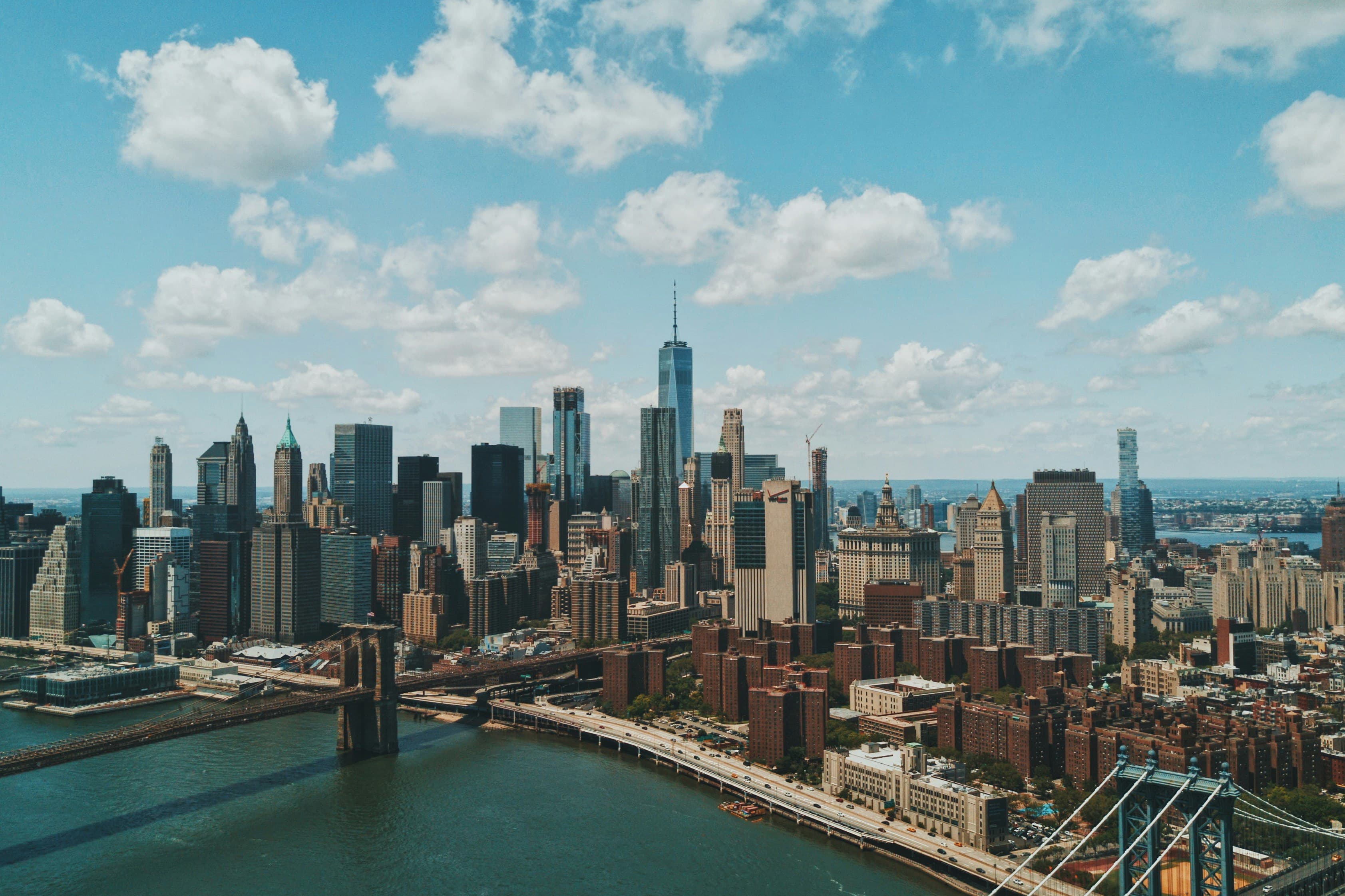
Photo: Patrick Tomasso on Unsplash
- PermitRequired · $145 registration, up to 4 years
- Primary residenceRequired
- Number on listingRequired
- Night capNone published
Every New York City rule, sorted by what it asks
Filter by topic. Each line carries the number of its official source, listed at the bottom of the page.
You must
- Register with the city before you host[2]
- Be a natural person and the unit's permanent occupant[3][8]
- Renters: certify your lease does not prohibit hosting[8]
- Show your registration number in every ad, matching your application[8]
- Renew within four years, with all fines paid first[8][6]
- Stop booking, cancel reservations and end registration if you move out[8]
- Use a unit whose occupancy classification allows residential use[8]
- Live in the same unit as your guests[2]
- Give every guest access to the whole unit and each exit[11][2]
- Post a diagram of all exit routes inside during each stay[8]
- Collect NYC hotel tax if you have 3 platform rentals a year or one over 14 days[12]
You must not
- Rent an entire apartment or home for fewer than 30 days[3]
- Host more than two guests, not counting children under 4[2]
- Register more than one dwelling unit[8]
- Host in a rent-regulated unit, NYCHA apartment or rooming unit[8]
- Host in a building on the Prohibited Buildings List[8][5]
- Have an uncorrected fire code or Class C violation, or a vacate order[8]
- Let guests sleep where it is illegal, such as an attic, cellar or garage[7]
What a new permit costs
Fee for one registration, valid up to four years
$145first application
- Application$145
- Renewal$145
A small payment processing fee is added to the $145.[3]
How to apply in New York City
Official name: Short-Term Rental Registration (Local Law 18)
- 1
Confirm the unit is eligible: not rent-regulated, not in a NYCHA development and not in a building on the Prohibited Buildings List.[8]
- 2
Gather one unexpired ID and documents from two categories proving you live at the address, such as a utility bill dated within 60 days.[8]
- 3
Apply on the Short-Term Rental Registration Portal and list the URL or listing ID of every existing listing for the unit.[8]
- 4
Pay the $145 fee when you submit, and send any document OSE requests within 30 days or the application is rejected.[8]
- 5
Once approved, add the registration number to every listing and post the certificate and an exit-route diagram inside the unit.[8]
Four jurisdictions, same questions
The New York City column comes from the official sources on this page. The other columns show the headline rule from each WonderGuest page. Open a page for the full detail.
| Question | New York City | Los Angeles | Las Vegas | Denver |
|---|---|---|---|---|
| Permit | Required$145 registration, up to 4 years | Required$441 base fee, adjusted each year | RequiredCity license, $500 a year | Required$50 application, $100 license |
| Primary residence | Required | Required | Required | Required |
| Night cap | None published | 120 days a year unless Extended | None published | None published |
| Number on listing | Required | Required | Required | Required |
| Where allowed | Your home only, with you present | Your primary residence only | Owner-occupied, 660 feet apart | Your primary residence only |
| Occupancy tax | 7 to 8.875% sales tax via Airbnb | 14% city TOT, Airbnb collects | 13 to 13.38% TOT, Airbnb collects | 10.75% lodger's tax, Airbnb collects |
| Fine without permit | Up to $5,000 per transaction | $500 a day, or 2x nightly if higher | $1,000 to $10,000 per violation | Up to $999 per incident |
| Los Angeles rules | Las Vegas rules | Denver rules |
Coming up
What's changing
No change with an effective date appears in the official sources on this page as of September 14, 2026.
FAQ
New York City short-term rental questions
Is Airbnb banned in New York City?
Do I need to register to host on Airbnb in NYC?
Is it legal to stay in an Airbnb in New York City?
Can I report an illegal Airbnb next door in NYC?
How long does an NYC short-term rental registration last?
Sources
- Short-Term Rental Registration Law (Local Law 18), NYC Mayor's Office of Special Enforcement, read on September 14, 2026
- What is Local Law 18, NYC Mayor's Office of Special Enforcement, read on September 14, 2026
- FAQ for prospective hosts, NYC Mayor's Office of Special Enforcement, read on September 14, 2026
- FAQ for registered hosts, NYC Mayor's Office of Special Enforcement, read on September 14, 2026
- FAQ for building owners, NYC Mayor's Office of Special Enforcement, read on September 14, 2026
- Registration law enforcement, NYC Mayor's Office of Special Enforcement, read on September 14, 2026
- Tips for hosting a legal short-term rental, NYC Mayor's Office of Special Enforcement, read on September 14, 2026
- Final rules for short-term rental registration (43 RCNY ch. 21 and 22), NYC Mayor's Office of Special Enforcement, read on September 14, 2026
- Short-term rental registration dataset (January 7, 2026), NYC Mayor's Office of Special Enforcement, read on September 14, 2026
- Registered hosts surpass 3,500 (fiscal year 2026 data), NYC Mayor's Office of Special Enforcement, read on September 14, 2026
- Short-term rental registration, NYC311, read on September 14, 2026
- Hotel room occupancy tax FAQs, NYC Department of Finance, read on September 14, 2026
- Occupancy tax collection and remittance in New York, Airbnb Help Center, read on September 14, 2026
This page is not legal advice. It summarizes the official sources listed on this page as they read on September 14, 2026. Rules can change after that date, so check with the issuing office before you apply or publish a listing.
Before you list
Free tools for new hosts
Short-term rental agreement generator
Parties, dates, rent, deposit checked against your state's cap, and the house rules clauses you enforce. A signed-ready PDF for direct and Vrbo bookings.
Airbnb house rules
Generate a complete PDF house rules document for your property: rules, schedule, amenities, emergency contacts.
Rental arbitrage calculator
Rent, deposit, furnishing, nightly rate and occupancy. You get monthly cash flow, the occupancy you break even at, and how long the setup takes to pay back.
Check-in instructions
The message a guest reads before getting in: access, keys, WiFi, parking, contact. English or bilingual output.