Minnesota short-term rental laws (2026)
A single rentable unit booked for one night already needs a lodging license in Minnesota. With that license, short stays are legal: the state health department treats the home as a hotel or motel. Which agency issues it depends on the address.[3]
Every rule below links to the official source it comes from, verified October 1, 2026.
Is Airbnb legal in Minnesota?
Legal, with a lodging license
Minnesota licenses vacation home rentals like hotels. Your city can add its own license and lodging tax.
10 official sources · verified October 1, 2026
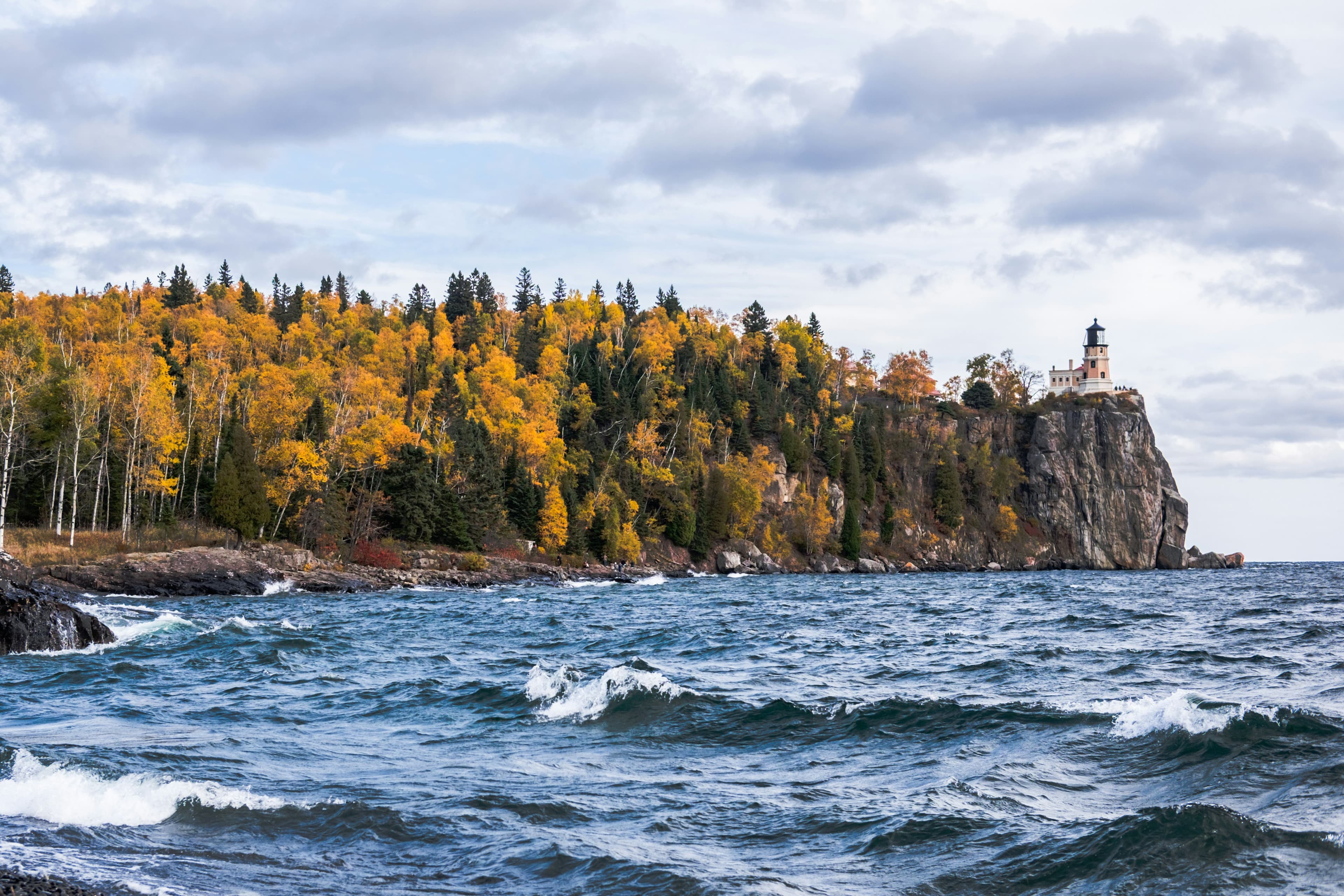
Photo: Luke Tanis on Unsplash
- PermitRequired · State hotel or motel license, renewed yearly
- Primary residenceVaries
- Number on listingNot required
- Night capNone in state law
Minnesota short-term rental laws
Vacation home rentals need a hotel or motel license in Minnesota. The Department of Health issues it, unless it has delegated lodging licensing to a city or county health agency. The license runs one year at a time. The base fee under Section 157.16 is $300, with $15 added for each guest room, cottage or other rental unit. A $50 statewide hospitality fee is due every year on top. Stays under 30 days owe the 6.875% state sales tax, and your city may add its own license.[2]
Every Minnesota rule, sorted by what it asks
Filter by topic. Each line carries the number of its official source, listed at the bottom of the page.
You must
- Get a hotel or motel license from MDH, unless a local health agency covers your address[3]
- Pass plan review and get approval before the first guest arrives[2]
- Renew the license every year and pay the $50 hospitality fee[2]
- Collect sales tax on stays under 30 days that guests book directly with you[6]
- Train owners, managers and on-site staff to recognize sex trafficking[5]
- Check that local zoning allows the rental before you open[4]
You must not
Cities in this state
Short-term rental rules in 5 Minnesota cities
Ranked by the share of housing the Census counts as seasonal.
| City | Local rule | Primary residence | Night cap | Seasonal homes per 1,000 |
|---|---|---|---|---|
| Emily short-term rental rulesCrow Wing County, MN | License required | Not published | None in Chapter 150 | 658 |
| Crosslake short-term rental rulesCrow Wing County, MN | License required | Not published | None published by the city | 573 |
| Breezy Point short-term rental rulesCrow Wing County, MN | Capped | Not published | None published. Licenses capped at 60 | 391 |
| Duluth short-term rental rulesSt. Louis County, MN | Capped | Varies | 21 nights a year on the limited permit | 15 |
| Minneapolis short-term rental rulesHennepin County, MN | License required | Varies | None in the city code | 7 |
How to apply in Minnesota
Official name: Hotel or motel license (lodging)
- 1
Find out which agency licenses lodging at your address: the Department of Health or a delegated local health agency.[3]
- 2
Submit your plans with the plan review fee, which must accompany the first license application.[2]
- 3
Pay the license fee and receive approval to operate before the first guest arrives.[2]
- 4
Direct bookings are yours to tax. Get a Department of Revenue registration, then collect sales tax on them.[6]
Five jurisdictions, same questions
The Minnesota column comes from the official sources on this page. The other columns show the headline rule from each WonderGuest page. Open a page for the full detail.
| Question | Minnesota | Florida | Hawaii | Tennessee | Texas |
|---|---|---|---|---|---|
| Permit | RequiredState hotel or motel license, renewed yearly | RequiredState license, $170 a year | RequiredState GET and TAT licenses | RequiredCity permit where one exists | Not requiredNone issued by the state |
| Primary residence | Varies | Not required | Varies | Varies | Not required |
| Night cap | None in state law | None published by the state | No state cap, county rules vary | None. Under 30 nights is the definition | None published by the state |
| Number on listing | Not required | Not required | Required | Not required | Not required |
| Where allowed | Where local zoning allows it | No local bans after June 1, 2011 | Set by each county | City zoning decides, legacy status aside | Under the city's own regulations |
| Occupancy tax | 6.875% state sales tax under 30 days | 6% state tax, Airbnb collects | 11% state TAT plus county TAT | City tax up to 4%, 8% with the county | 6% state, plus a local rate |
| Fine without permit | $200 penalty, $450 after 30 days | Second-degree misdemeanor | $500 fine, $2,000 if cash-based | Use suspended while unpermitted | None set by the state |
| Florida short-term rental rules | Hawaii short-term rental rules | Tennessee short-term rental rules | Texas short-term rental rules |
Coming up
What's changing
Effective July 1, 2034
The 0.375% constitutional add-on to the state sales tax expires under section 297A.62, subdivision 1a.[8]
FAQ
Minnesota short-term rental questions
Do I need a state license for a short-term rental in Minnesota?
Who collects sales tax on a Minnesota short-term rental?
Does the 14-day rule exempt my rental from Minnesota sales tax?
How much is the Minnesota lodging license?
Can a Minnesota city tax short-term rentals on its own?
Sources
- Minnesota Statutes section 157.15, definitions (hotel or motel), Minnesota Office of the Revisor of Statutes, read on October 1, 2026
- Minnesota Statutes section 157.16, licenses required and fees, Minnesota Office of the Revisor of Statutes, read on October 1, 2026
- Lodging in Minnesota, definitions and licenses required per type of lodging, Minnesota Department of Health, read on October 1, 2026
- Lodging in Minnesota, frequently asked questions, Minnesota Department of Health, read on October 1, 2026
- Safe Harbor prevention and response training for the Minnesota lodging industry, Minnesota Department of Health, read on October 1, 2026
- Sales, residential short-term rentals, Minnesota Department of Revenue, read on October 1, 2026
- Minnesota Statutes section 297A.61, subdivision 3, lodging and related services, Minnesota Office of the Revisor of Statutes, read on October 1, 2026
- Minnesota Statutes section 297A.62, sales tax rates, Minnesota Office of the Revisor of Statutes, read on October 1, 2026
- Minnesota Statutes section 297A.66, subdivision 6, lodging services, Minnesota Office of the Revisor of Statutes, read on October 1, 2026
- Minnesota Statutes section 469.190, local lodging tax, Minnesota Office of the Revisor of Statutes, read on October 1, 2026
This page is not legal advice. It summarizes the official sources listed on this page as they read on October 1, 2026. Rules can change after that date, so check with the issuing office before you apply or publish a listing.
Before you list
Free tools for new hosts
Short-term rental agreement generator
Parties, dates, rent, deposit checked against your state's cap, and the house rules clauses you enforce. A signed-ready PDF for direct and Vrbo bookings.
Airbnb host fee calculator
What Airbnb takes on a booking under the 15.5% host-only fee or the old split fee, what the guest pays on top, and the payout that reaches you.
Airbnb house rules
Generate a complete PDF house rules document for your property: rules, schedule, amenities, emergency contacts.
Check-in instructions
The message a guest reads before getting in: access, keys, WiFi, parking, contact. English or bilingual output.