Washington, DC short-term rental laws (2026)
In Washington, DC, one condition governs short-term rentals: the home has to be your primary residence, the one eligible for the Homestead Tax Deduction. With a license from the Department of Licensing and Consumer Protection you can host in it without limit while you are there. When you are away, the same home becomes a vacation rental, capped at 90 nights a calendar year unless DLCP grants an exemption. Only a natural person can hold the license, never an LLC, and an English basement counts as part of your residence. Penalties climb from $500 for a first violation to $6,000 plus revocation for a third.[1]
Every rule below links to the official source it comes from, verified September 14, 2026.
Is Airbnb legal in Washington, DC?
Legal, in your primary residence
Only your primary residence, with a DLCP license. Stays while you are away stop at 90 nights a year.
11 official sources · verified September 14, 2026
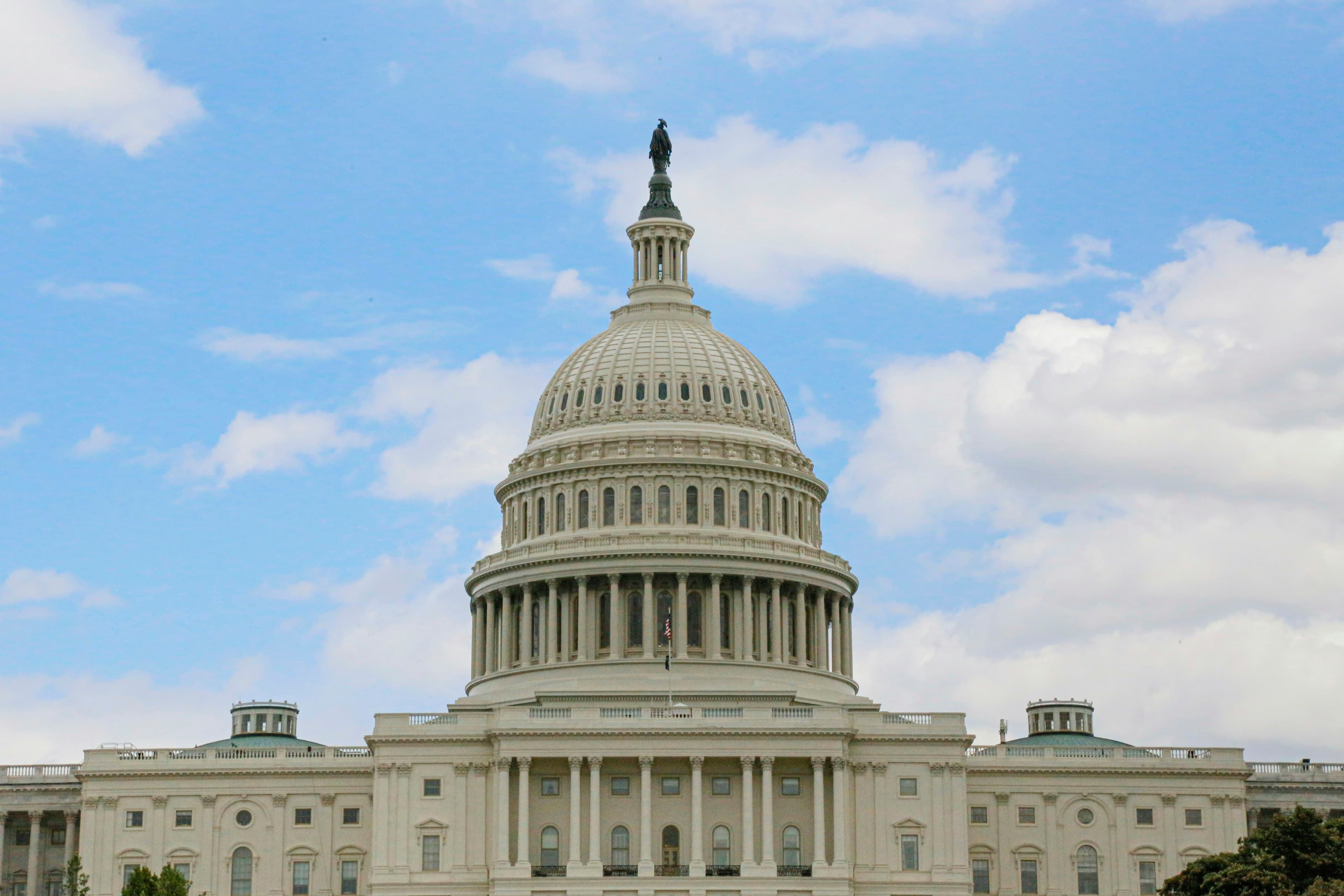
Photo: Syed F Hashemi on Unsplash
- PermitRequired · $99.00 license, 2 years
- Primary residenceRequired
- Number on listingRequired
- Night cap90 nights a year when unhosted
Every Washington, DC rule, sorted by what it asks
Filter by topic. Each line carries the number of its official source, listed at the bottom of the page.
You must
- Hold a DLCP short-term rental license for your primary residence[1]
- Use a Vacation Rental license when you are away during stays[1]
- Make sure the owner is eligible for a Certificate of Clean Hands[1]
- Show your license number in each listing[1]
- Renew every two years, or pay late penalties from $75.00[5][2]
- Rent only a property eligible for the homestead deduction[4]
- Condo, co-op or HOA: attest the bylaws allow it or you have written permission[1]
- Post the license inside the property[1]
- Give guests a 24-hour phone number for you or someone acting for you[1]
- Keep all exits unobstructed[1]
- Have working smoke and CO detectors and a portable fire extinguisher[1]
- Carry liability insurance: DLCP asks $250,000, the DC Code says $500,000[1][4]
You must not
- Host through an LLC or corporation[1]
- Hold more than one short-term rental license endorsement[5]
- Rent while away more than 90 nights a calendar year without an exemption[1]
- Rent for more than 30 consecutive nights in one stay[1]
- List on a booking service that does not clearly display your license number[6]
- Rent an investment property or one owned by a corporate entity[1]
- Exceed 8 guests or 2 per bedroom, whichever is greater[1]
What a new permit costs
Fee for either license, Short-Term Rental or Vacation Rental
$99two-year license
- License$99
A late renewal adds $75.00 in the first 30 days, another $75.00 to day 180 and $200.00 to day 270.[2]
How to apply in Washington, DC
Official name: Basic Business License with a Short-Term Rental or Short-Term Rental: Vacation Rental endorsement
- 1
Create an Access DC account, which every DLCP system requires.[1]
- 2
Confirm the property is eligible for the Homestead Tax Deduction and that you are eligible for a Certificate of Clean Hands.[1]
- 3
Get proof of liability insurance of at least $250,000, plus the condo or HOA attestation if one applies.[1]
- 4
On boss.dc.gov, select New Business License, apply for a Short-Term Rental or Vacation Rental license and pay $99.00.[1]
- 5
Once licensed, post the license inside the property and add the license number to each listing.[1]
Four jurisdictions, same questions
The Washington, DC column comes from the official sources on this page. The other columns show the headline rule from each WonderGuest page. Open a page for the full detail.
| Question | Washington, DC | New York City | Los Angeles | Las Vegas |
|---|---|---|---|---|
| Permit | Required$99.00 license, 2 years | Required$145 registration, up to 4 years | Required$441 base fee, adjusted each year | RequiredCity license, $500 a year |
| Primary residence | Required | Required | Required | Required |
| Night cap | 90 nights a year when unhosted | None published | 120 days a year unless Extended | None published |
| Number on listing | Required | Required | Required | Required |
| Where allowed | Your primary residence only | Your home only, with you present | Your primary residence only | Owner-occupied, 660 feet apart |
| Occupancy tax | 15.95% sales tax, Airbnb collects | 7 to 8.875% sales tax via Airbnb | 14% city TOT, Airbnb collects | 13 to 13.38% TOT, Airbnb collects |
| Fine without permit | $500 first violation, $6,000 third | Up to $5,000 per transaction | $500 a day, or 2x nightly if higher | $1,000 to $10,000 per violation |
| New York City rules | Los Angeles rules | Las Vegas rules |
Coming up
What's changing
No change with an effective date appears in the official sources on this page as of September 14, 2026.
FAQ
Washington, DC short-term rental questions
Do I need a license to host on Airbnb in Washington, DC?
How do you get a short-term rental license in DC?
How do you renew a short-term rental license in DC?
Can you rent out your whole DC home while you are away?
Can renters host a short-term rental in DC?
Sources
- Operating a short-term rental in the District of Columbia, DC Department of Licensing and Consumer Protection, read on September 14, 2026
- Basic Business License renewal overview, DC Department of Licensing and Consumer Protection, read on September 14, 2026
- D.C. Code § 30-201.01, definitions, Council of the District of Columbia, read on September 14, 2026
- D.C. Code § 30-201.02, restrictions on short-term rentals, Council of the District of Columbia, read on September 14, 2026
- D.C. Code § 30-201.04, license endorsement issuance, Council of the District of Columbia, read on September 14, 2026
- D.C. Code § 30-201.06, host requirements, Council of the District of Columbia, read on September 14, 2026
- D.C. Code § 30-201.08, booking service requirements, Council of the District of Columbia, read on September 14, 2026
- D.C. Code § 30-201.10, penalties, Council of the District of Columbia, read on September 14, 2026
- Notice of October 1, 2025 tax changes, DC Office of Tax and Revenue, read on September 14, 2026
- Occupancy tax collection and remittance in the District of Columbia, Airbnb Help Center, read on September 14, 2026
- Mayor Bowser announces new short-term rental legislation, DC Department of Licensing and Consumer Protection, read on September 14, 2026
This page is not legal advice. It summarizes the official sources listed on this page as they read on September 14, 2026. Rules can change after that date, so check with the issuing office before you apply or publish a listing.
Before you list
Free tools for new hosts
Short-term rental agreement generator
Parties, dates, rent, deposit checked against your state's cap, and the house rules clauses you enforce. A signed-ready PDF for direct and Vrbo bookings.
Airbnb house rules
Generate a complete PDF house rules document for your property: rules, schedule, amenities, emergency contacts.
Rental arbitrage calculator
Rent, deposit, furnishing, nightly rate and occupancy. You get monthly cash flow, the occupancy you break even at, and how long the setup takes to pay back.
Check-in instructions
The message a guest reads before getting in: access, keys, WiFi, parking, contact. English or bilingual output.