Utah short-term rental laws (2026)
Utah leaves the short-term rental license to its cities. A city that allows rentals may ask Airbnb to pull a listing that breaks its rules. It may do so only for a license or zoning violation, naming the listing's URL.[1]
Every rule below links to the official source it comes from, verified October 2, 2026.
Is Airbnb legal in Utah?
Legal, under city licenses
Utah issues no state license. Your city decides, and it cannot fine you over a listing alone.
13 official sources · verified October 2, 2026
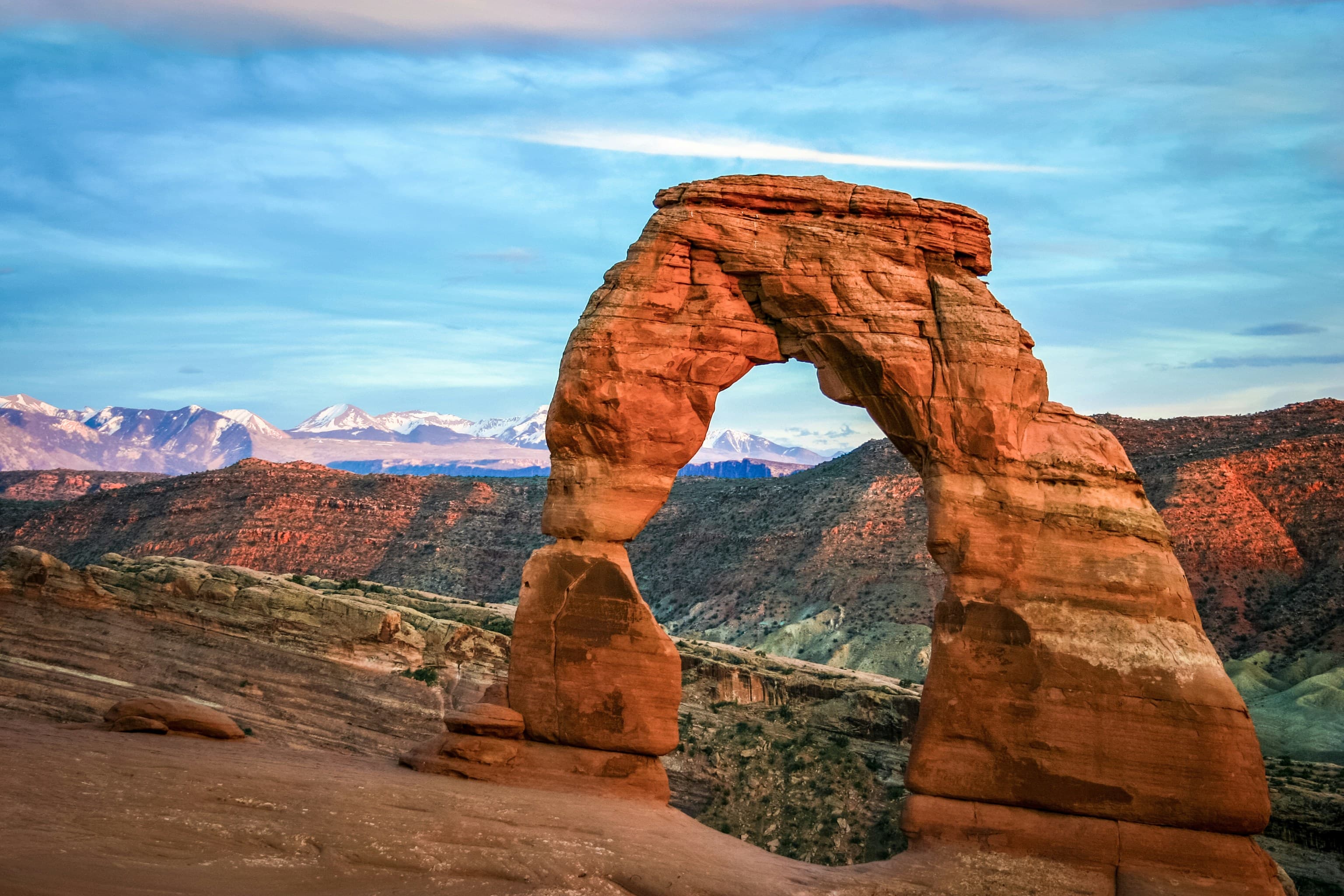
Photo: Photoholgic on Unsplash
- PermitNot required · None from the state. Cities issue their own
- Primary residenceVaries
- Number on listingNot required
- Night capNone in state law
Utah short-term rental laws
Utah's core short-term rental law is Utah Code § 10-8-85.4, whose current text took effect November 6, 2025. It covers a home, or part of one, offered for fewer than 30 consecutive days. A city may require a business license or other permit before you operate. It may not ban listing the rental on a booking website. Nor may it fine or prosecute anyone solely for that listing. A listing counts as evidence only when the city holds other information of a violation.[1]
Every Utah rule, sorted by what it asks
Filter by topic. Each line carries the number of its official source, listed at the bottom of the page.
You must
You must not
Cities in this state
Short-term rental rules in 5 Utah cities
Ranked by the share of housing the Census counts as seasonal.
| City | Local rule | Primary residence | Night cap | Seasonal homes per 1,000 |
|---|---|---|---|---|
| Brian Head short-term rental rulesIron County, UT | License required | Not published | None published by the town | 766 |
| Brighton short-term rental rulesSalt Lake County, UT | Capped | Not published | None in the code. Two-night minimum stay | 734 |
| Garden City short-term rental rulesRich County, UT | License required | Not published | None published by the town | 731 |
| Park City short-term rental rulesSummit County, UT | Allowed by zone | Not published | None published by the city | 486 |
| Salt Lake City short-term rental rulesSalt Lake County, UT | License required | Not published | 200 nights per annual license period, two-night minimum stay | 14 |
How to apply in Utah
- 1
Read your city's code before buying or listing. Brighton, for one, stops issuing licenses in Silver Fork after 31 and in Pine Tree after 5.[12]
- 2
Get the city license before advertising. Salt Lake City makes it unlawful to advertise a short-term rental without one.[7]
- 3
If you take bookings outside a platform, register sales tax and transient room tax accounts with form TC-69.[6]
Five jurisdictions, same questions
The Utah column comes from the official sources on this page. The other columns show the headline rule from each WonderGuest page. Open a page for the full detail.
| Question | Utah | Arizona | Colorado | New Mexico | Nevada |
|---|---|---|---|---|---|
| Permit | Not requiredNone from the state. Cities issue their own | RequiredLocal permit where the city has one, $250 at most | RequiredLocal license where your county or town has one | Not requiredState tax ID only, permits are local | Not requiredLocal license, state business license in some cities |
| Primary residence | Varies | Varies | Varies | Varies | Varies |
| Night cap | None in state law | None the statute allows a city to set | A local option, where adopted | None in state law | None published by the state |
| Number on listing | Not required | Required | Not required | Not required | Not required |
| Where allowed | Where the city's zoning allows it | Everywhere: a ban is preempted | Set by local rules, bans included | Where the local ordinance allows it | Unincorporated Clark County: 1,000 feet apart, no apartments |
| Occupancy tax | 1.07% state room tax, plus sales tax | Transient lodging tax under 30 nights | 2.9% state sales tax, plus local taxes | Local, up to 5% of rent | Set by each county, above state minimums |
| Fine without permit | Set by each city | Up to $1,000 a month | Listing removed within 7 days of a county notice | Set locally, $500 a day in Albuquerque | $1,000 to $10,000 a day in Clark County |
| Arizona short-term rental rules | Colorado short-term rental rules | New Mexico short-term rental rules | Nevada short-term rental rules |
Coming up
What's changing
No change with an effective date appears in the official sources on this page as of October 2, 2026.
FAQ
Utah short-term rental questions
Is Airbnb legal in Utah?
Can a Utah city fine me just for listing my home on Airbnb?
What is Utah's state transient room tax?
Do Airbnb and Vrbo collect Utah's taxes for me?
Do Utah resort towns charge an extra tax?
Sources
- Utah Code Section 10-8-85.4, ordinances regarding short-term rentals (effective November 6, 2025), Utah State Legislature, read on October 2, 2026
- Utah Code Section 17-78-1102, county ordinances regarding short-term rentals (effective November 6, 2025), Utah State Legislature, read on October 2, 2026
- Utah Code Section 59-12-103, sales and use tax base and rates, Utah State Legislature, read on October 2, 2026
- Utah Code Sections 59-28-102 and 59-28-103, State Transient Room Tax Act, Utah State Legislature, read on October 2, 2026
- Utah Code Sections 59-12-401 and 59-12-402, resort communities taxes, Utah State Legislature, read on October 2, 2026
- Transient Room Taxes, Utah State Tax Commission, read on October 2, 2026
- City Code, Chapter 5.13, Short Term Rentals (Ord. 38-26, 2026), Salt Lake City, read on October 2, 2026
- Municipal Code, Section 4-5-3, Regulation of Nightly Rentals, Park City, read on October 2, 2026
- Land Management Code, Chapter 15-2.1, Historic Residential-Low Density (HRL) District, Park City, read on October 2, 2026
- Municipal Ordinances, Chapter 8-600, Short Term Rental Ordinance (updated June 24, 2026), Town of Garden City, read on October 2, 2026
- Short Term Rental Policy, Town of Brian Head, read on October 2, 2026
- Municipal Code, Chapter 5.19, Short-Term Rentals, Town of Brighton, read on October 2, 2026
- Short Term Rentals, Town of Brighton, read on October 2, 2026
This page is not legal advice. It summarizes the official sources listed on this page as they read on October 2, 2026. Rules can change after that date, so check with the issuing office before you apply or publish a listing.
Before you list
Free tools for new hosts
Short-term rental agreement generator
Parties, dates, rent, deposit checked against your state's cap, and the house rules clauses you enforce. A signed-ready PDF for direct and Vrbo bookings.
Airbnb host fee calculator
What Airbnb takes on a booking under the 15.5% host-only fee or the old split fee, what the guest pays on top, and the payout that reaches you.
Airbnb house rules
Generate a complete PDF house rules document for your property: rules, schedule, amenities, emergency contacts.
Check-in instructions
The message a guest reads before getting in: access, keys, WiFi, parking, contact. English or bilingual output.