North Carolina short-term rental laws (2026)
North Carolina draws its line in an unusual place. A city here cannot require you to register a rental property or to obtain a permit under its housing or minimum housing codes in order to rent it out, because G.S. 160D-1207(c) says so and the Court of Appeals enforced it in Schroeder v. City of Wilmington. What a city can still do is zoning, and that is where the real restrictions live: it may confine whole-house lodging to named districts, demand off-street parking per bedroom, ban large events, require insurance and posted safety information. Read the zoning map before you read the rental rules.[1]
Every rule below links to the official source it comes from, verified September 20, 2026.
Is Airbnb legal in North Carolina?
No register, but zoning decides
A North Carolina city cannot make you register a rental. It can confine the use to certain districts, and that is where the restriction really sits.
2 official sources · verified September 20, 2026
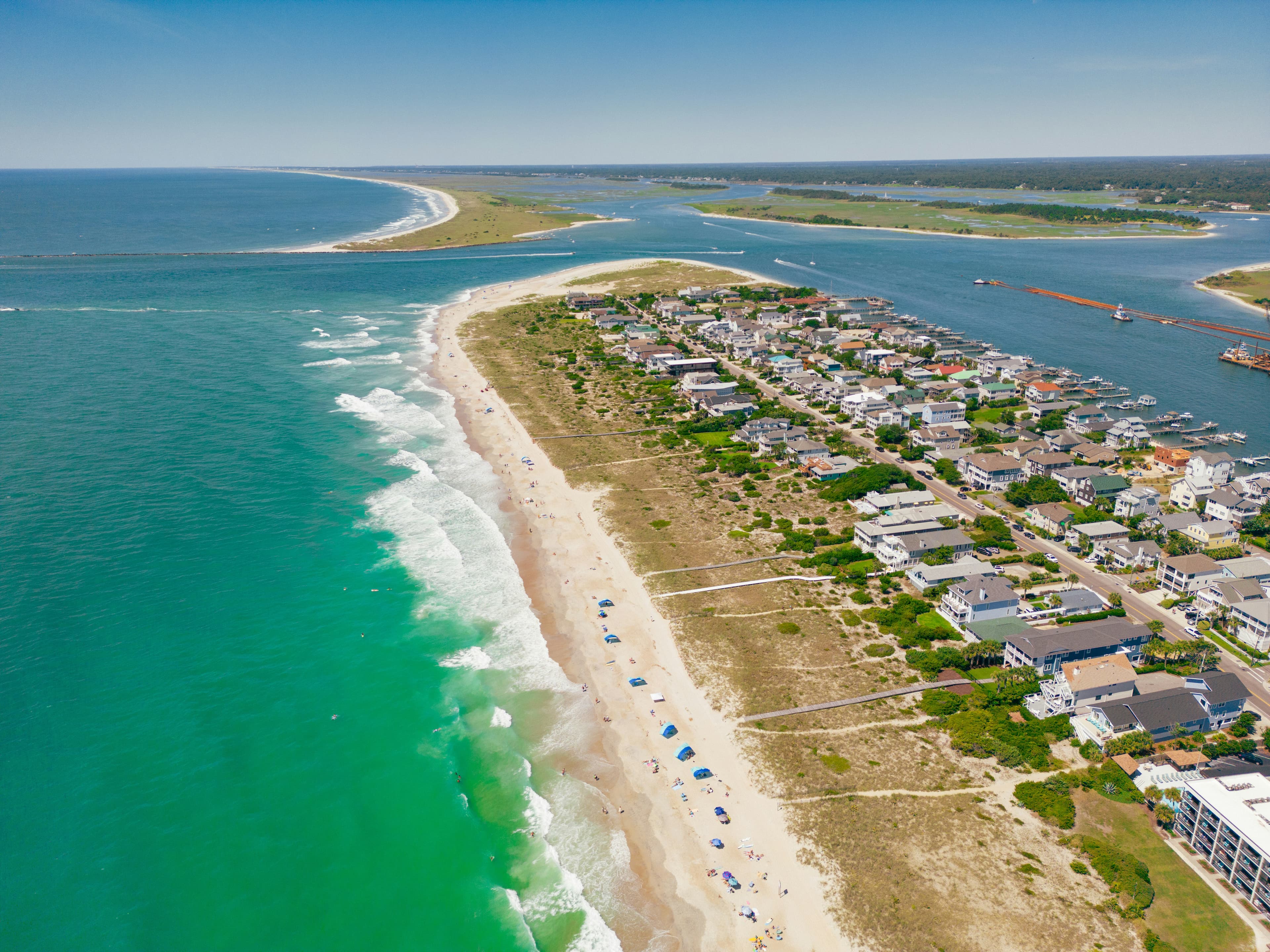
Photo: Samuel Cruz on Unsplash
- PermitNot required · No registration; zoning approval instead
- Primary residenceVaries
- Number on listingNot required
- Night capNone; Wilmington's cap was struck down
Every North Carolina rule, sorted by what it asks
Filter by topic. Each line carries the number of its official source, listed at the bottom of the page.
You must
- Check which zoning district your address sits in before anything else: that is what decides the use.[1]
- Provide the off-street parking your city's ordinance requires, commonly one space per bedroom.[1]
- Post the safety information the ordinance lists, such as the non-emergency police number and trash pick-up days.[1]
- Collect 4.75% state sales tax plus local and transit rates, and any city or county occupancy tax.[2]
You must not
- Do not host large events where the ordinance forbids them, and do not let guests cook in bedrooms.[1]
Not required
- You do not have to register the property with the city: G.S. 160D-1207(c) preempts rental registers.[1]
- You do not need a housing-code permit to rent: the statute bars permits under Article 11 and Article 12 for leasing residential property.[1]
- You owe no accommodation tax on a stay of ninety continuous days or more by the same person.[2]
Cities in this state
Short-term rental rules in 13 North Carolina cities
Ranked by the share of housing the Census counts as seasonal. Each city page carries its own rules, its tax stack and its census figures.
| City | County | City rule | Primary residence | Seasonal homes per 1,000 | Seasonal homes |
|---|---|---|---|---|---|
| Beech Mountain | Avery and Watauga | Registration required | Not published | 721 | 1,743 |
| Blowing Rock | Watauga and Caldwell | Allowed by zone | Not published | 702 | 1,356 |
| Oak Island | Brunswick | Allowed by zone | Not published | 448 | 4,840 |
| Kure Beach | New Hanover | No city ordinance | Not published | 394 | 841 |
| Lake Lure | Rutherford | Capped | Not required | 384 | 932 |
| Carolina Beach | New Hanover | Registration required | Not published | 373 | 2,337 |
| Nags Head | Dare | Registration required | Varies | 316 | 1,668 |
| Southport | Brunswick | Allowed by zone | Varies | 140 | 346 |
| Brevard | Transylvania | Allowed by zone | Varies | 92 | 397 |
| Pinehurst | Moore | Allowed by zone | Not published | 76 | 723 |
| Wilmington | New Hanover | Allowed by zone | Varies | 23 | 1,452 |
| Asheville | Buncombe | Allowed by zone | Required | 17 | 850 |
| Boone | Watauga | Allowed by zone | Required | 12 | 83 |
Four jurisdictions, same questions
The North Carolina column comes from the official sources on this page. The other columns show the headline rule from each WonderGuest page. Open a page for the full detail.
| Question | North Carolina | Nashville | New Orleans | Hawaii |
|---|---|---|---|---|
| Permit | Not requiredNo registration; zoning approval instead | Required$313 permit fee, 12 months | Required$500 owner, $150 operator a year | RequiredState GET and TAT licenses |
| Primary residence | Varies | Varies | Varies | Varies |
| Night cap | None; Wilmington's cap was struck down | None published | None published | No state cap, county rules vary |
| Number on listing | Not required | Required | Required | Required |
| Where allowed | Districts the city names for the use | Set by zoning and owner occupancy | Listed districts, one per block | Set by each county |
| Occupancy tax | 4.75% state plus local and occupancy tax | Airbnb collects occupancy taxes | 6.75% STR tax, Airbnb collects | 11% state TAT plus county TAT |
| Fine without permit | No state penalty published | Not published | At least $1,000 per offense per day | $500 fine, $2,000 if cash-based |
| Nashville rules | New Orleans rules | Hawaii rules |
Coming up
What's changing
No change with an effective date appears in the official sources on this page as of September 20, 2026.
FAQ
North Carolina short-term rental questions
Can a North Carolina city require me to register my short-term rental?
So what can a city still do?
Is a zoning compliance permit the same as a registration?
What tax applies to a North Carolina vacation rental?
Sources
- Short-Term Rental Regulations after Schroeder, Coates' Canons, UNC School of Government, read on September 20, 2026
- Rentals of Accommodations, Sales and Use Tax, North Carolina Department of Revenue, read on September 20, 2026
This page is not legal advice. It summarizes the official sources listed on this page as they read on September 20, 2026. Rules can change after that date, so check with the issuing office before you apply or publish a listing.
Before you list
Free tools for new hosts
Short-term rental agreement generator
Parties, dates, rent, deposit checked against your state's cap, and the house rules clauses you enforce. A signed-ready PDF for direct and Vrbo bookings.
Airbnb house rules
Generate a complete PDF house rules document for your property: rules, schedule, amenities, emergency contacts.
Rental arbitrage calculator
Rent, deposit, furnishing, nightly rate and occupancy. You get monthly cash flow, the occupancy you break even at, and how long the setup takes to pay back.
Check-in instructions
The message a guest reads before getting in: access, keys, WiFi, parking, contact. English or bilingual output.