South Carolina short-term rental laws (2026)
State law in South Carolina allows short-term renting and deals with it mostly through taxes. One of them falls on the house: a legal residence rented more than 72 days in one calendar year loses its 4% property tax ratio.[6]
Every rule below links to the official source it comes from, verified October 2, 2026.
Is Airbnb legal in South Carolina?
Legal, with a 7% state tax
No state permit is required. The state taxes stays under 90 days at 7%, and your city sets the rest.
12 official sources · verified October 2, 2026
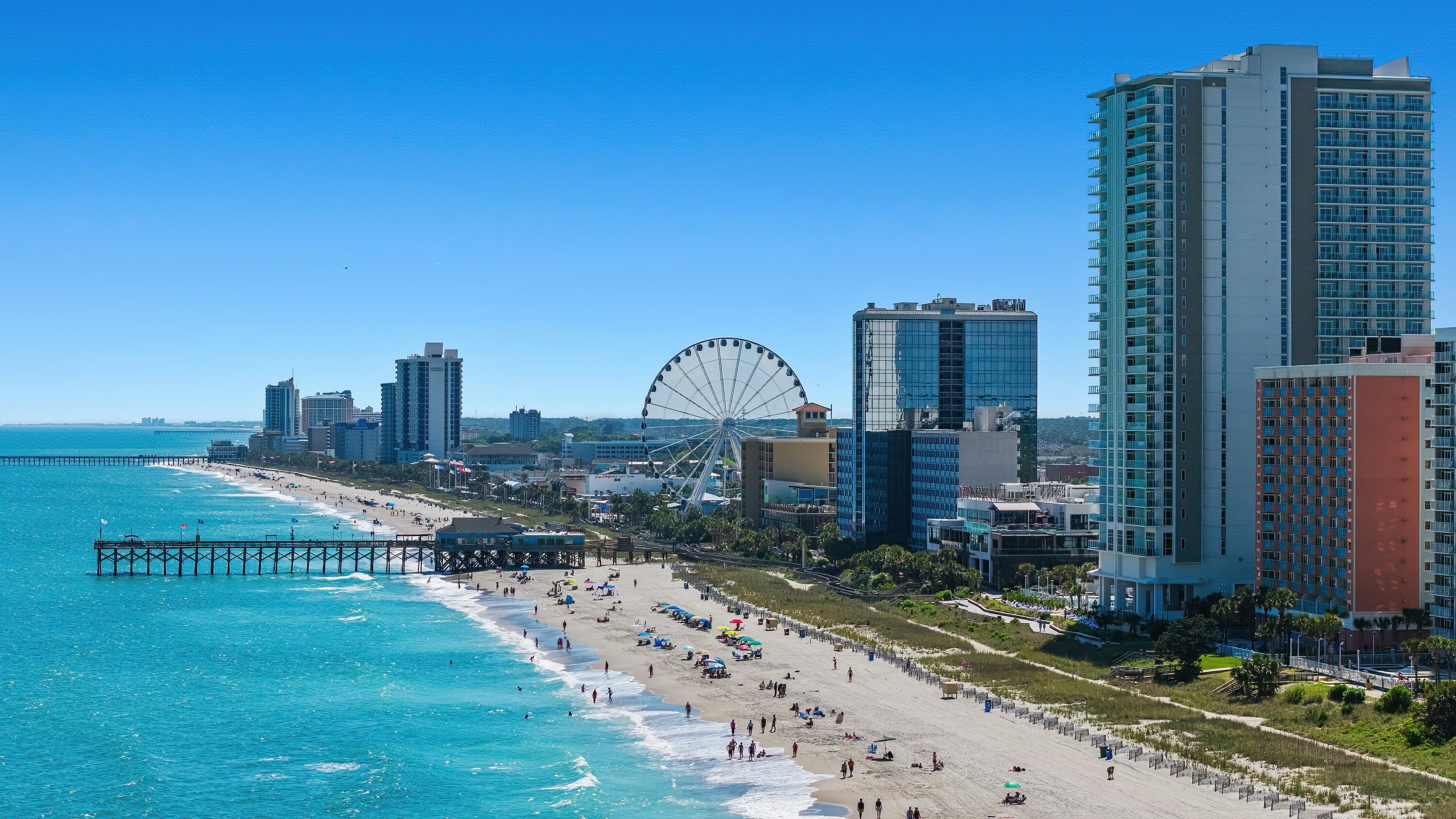
Photo: High Tide Content on Unsplash
- PermitNot required · No state rental permit, only a tax license
- Primary residenceVaries
- Number on listingNot required
- Night capNone in state law
South Carolina short-term rental laws
There is no statewide short-term rental permit to apply for in South Carolina. Local governments write the operating rules, zoning and license caps among them. The state taxes every stay shorter than 90 continuous days at 7%, made of a 5% sales tax plus a 2% accommodations tax. Counties and cities may add a local accommodations tax of up to 3%. Booking guests yourself requires a state license from the Department of Revenue to file. Hosts who rent only through a manager or a travel company that collects the payment skip that license. State law also requires a written agreement for every vacation rental under 90 days.[2]
Every South Carolina rule, sorted by what it asks
Filter by topic. Each line carries the number of its official source, listed at the bottom of the page.
You must
- Collect the 7% state tax on stays shorter than 90 continuous days[1][2]
- Get a state tax license for each location if you book any guests directly[2][3]
- Check the city's own zoning, license or permit rules[10][11]
- Sign a written vacation rental agreement for every stay under 90 days[7]
- Tell the assessor within six months if your home stops qualifying for the 4% ratio[6]
You must not
Cities in this state
Short-term rental rules in 6 South Carolina cities
Ranked by the share of housing the Census counts as seasonal. Places the Census figure does not cover come first.
| City | Local rule | Primary residence | Night cap | Seasonal homes per 1,000 |
|---|---|---|---|---|
| Charleston short-term rental rules | Primary residence only | Required | None published | |
| Kiawah Island short-term rental rulesCharleston County, SC | Capped | Not published | None published, 14 days a year or less is exempt | 562 |
| North Myrtle Beach short-term rental rulesHorry County, SC | License required | Not published | None published | 483 |
| Folly Beach short-term rental rulesCharleston County, SC | Capped | Varies | 72 nights a year on an owner-occupied license | 474 |
| Hilton Head Island short-term rental rulesBeaufort County, SC | Permit required | Not published | None published | 252 |
| Myrtle Beach short-term rental rulesHorry County, SC | Allowed by zone | Not published | None published, zoning decides | 173 |
How to apply in South Carolina
- 1
Check whether your platform takes the booking along with the payment. If it does, it remits the state tax on the full booking.[2]
- 2
If you book any guests yourself, open a state tax account on MyDORWAY. Each return is due by the 20th day of the month after its filing period.[2]
- 3
Ask the county or city where the home sits which local accommodations taxes it collects itself. The Department of Revenue does not administer those.[2]
- 4
Give every guest staying under 90 days a written vacation rental agreement.[7]
Five jurisdictions, same questions
The South Carolina column comes from the official sources on this page. The other columns show the headline rule from each WonderGuest page. Open a page for the full detail.
| Question | South Carolina | North Carolina | Georgia | Florida | Hawaii |
|---|---|---|---|---|---|
| Permit | Not requiredNo state rental permit, only a tax license | Not requiredNo registration, zoning approval instead | RequiredLocal license where your city or county has one | RequiredState license, $170 a year | RequiredState GET and TAT licenses |
| Primary residence | Varies | Varies | Varies | Not required | Varies |
| Night cap | None in state law | None. Wilmington's cap was struck down | None in the state tax law | None published by the state | No state cap, county rules vary |
| Number on listing | Not required | Not required | Not required | Not required | Required |
| Where allowed | Wherever local zoning allows it | Districts the city names for the use | Wherever local rules allow it | No local bans after June 1, 2011 | Set by each county |
| Occupancy tax | 7% state under 90 days, plus local taxes | 4.75% state plus local and occupancy tax | $5 a night plus local tax up to 8% | 6% state tax, Airbnb collects | 11% state TAT plus county TAT |
| Fine without permit | Set locally, $250 to $1,000 on Hilton Head Island | No state penalty published | Set by your city or county | Second-degree misdemeanor | $500 fine, $2,000 if cash-based |
| North Carolina short-term rental rules | Georgia short-term rental rules | Florida short-term rental rules | Hawaii short-term rental rules |
Coming up
What's changing
No change with an effective date appears in the official sources on this page as of October 2, 2026.
FAQ
South Carolina short-term rental questions
Is Airbnb legal in South Carolina?
What taxes does a South Carolina short-term rental owe?
Does short-term renting affect South Carolina property tax?
Can a South Carolina city ban short-term rentals?
Do I need a written agreement for a South Carolina vacation rental?
Sources
- S.C. Code § 12-36-920, tax on accommodations for transients, South Carolina Legislature, read on October 1, 2026
- Accommodations Tax, South Carolina Department of Revenue, read on October 1, 2026
- Licensing: Retail License and other sales tax licenses, South Carolina Department of Revenue, read on October 1, 2026
- S.C. Code §§ 6-1-500 to 6-1-570, Local Accommodations Tax Act, South Carolina Legislature, read on October 1, 2026
- S.C. Code § 6-1-400, business license tax standardization, South Carolina Legislature, read on October 1, 2026
- S.C. Code § 12-43-220, assessment ratios and the 4% legal residence ratio, South Carolina Legislature, read on October 1, 2026
- S.C. Code §§ 27-50-210 to 27-50-270, South Carolina Vacation Rental Act, South Carolina Legislature, read on October 1, 2026
- H. 3861, Short-term rentals, Session 126 (2025-2026), bill status, South Carolina Legislature, read on October 2, 2026
- S. 442, Short Term Rentals, Session 126 (2025-2026), bill status, South Carolina Legislature, read on October 2, 2026
- Planning and Zoning Department, zoning and short-term rentals, City of Myrtle Beach, read on October 1, 2026
- Town Code, Title 10, Chapter 2, Short-Term Rentals (Ordinance 2025-20), Town of Hilton Head Island, via Municode, read on October 1, 2026
- Code of Ordinances, Article 14, Chapter 5, Rental Applications and Regulations, Town of Kiawah Island, via Municode, read on October 1, 2026
This page is not legal advice. It summarizes the official sources listed on this page as they read on October 2, 2026. Rules can change after that date, so check with the issuing office before you apply or publish a listing.
Before you list
Free tools for new hosts
Short-term rental agreement generator
Parties, dates, rent, deposit checked against your state's cap, and the house rules clauses you enforce. A signed-ready PDF for direct and Vrbo bookings.
Airbnb host fee calculator
What Airbnb takes on a booking under the 15.5% host-only fee or the old split fee, what the guest pays on top, and the payout that reaches you.
Airbnb house rules
Generate a complete PDF house rules document for your property: rules, schedule, amenities, emergency contacts.
Check-in instructions
The message a guest reads before getting in: access, keys, WiFi, parking, contact. English or bilingual output.