Airbnb guidebook: what it covers, and the four things it leaves out
Airbnb guidebooks cover the neighborhood, not your property. The four things the feature leaves out, and where each one actually belongs.

Written by Alexandre Pidault
Founder of WonderGuest
The Airbnb guidebook is a map of your neighborhood, not a manual for your property. It holds restaurants, parks and city advice. It does not hold your Wi-Fi password, your door code, your thermostat or your trash day, and it is attached to your account rather than to your listing. Fill it in anyway, then put the operational half somewhere the guest can actually reach it.
Hosts find this out in a predictable order. They spend an evening pinning twelve coffee shops, feel organized, and get the same Wi-Fi question three days later.
What the Airbnb guidebook actually is
Airbnb's help page on adding a guidebook, read on September 11, 2026, describes it in one line: a place to suggest your favorite restaurants, stores, parks and attractions. Places, neighborhoods and city advice.
That is the whole scope. It is a local recommendation tool with a map attached, built for the part of a stay that happens outside your four walls.
Airbnb does not publish a cap on how many places you can add, or a minimum. It also does not say whether photographs are required. Treat those as unspecified rather than unlimited.
For what happens inside the property, Airbnb points hosts to a different field. Its own guidance separates the guidebook from the manual that explains features of your listing, such as how the TV works.
The four things it leaves out
1. The Wi-Fi password
The single most requested item in short-term rentals, and the guidebook has no place for it. Wi-Fi lives in the arrival guide, alongside the check-in method and the house manual.
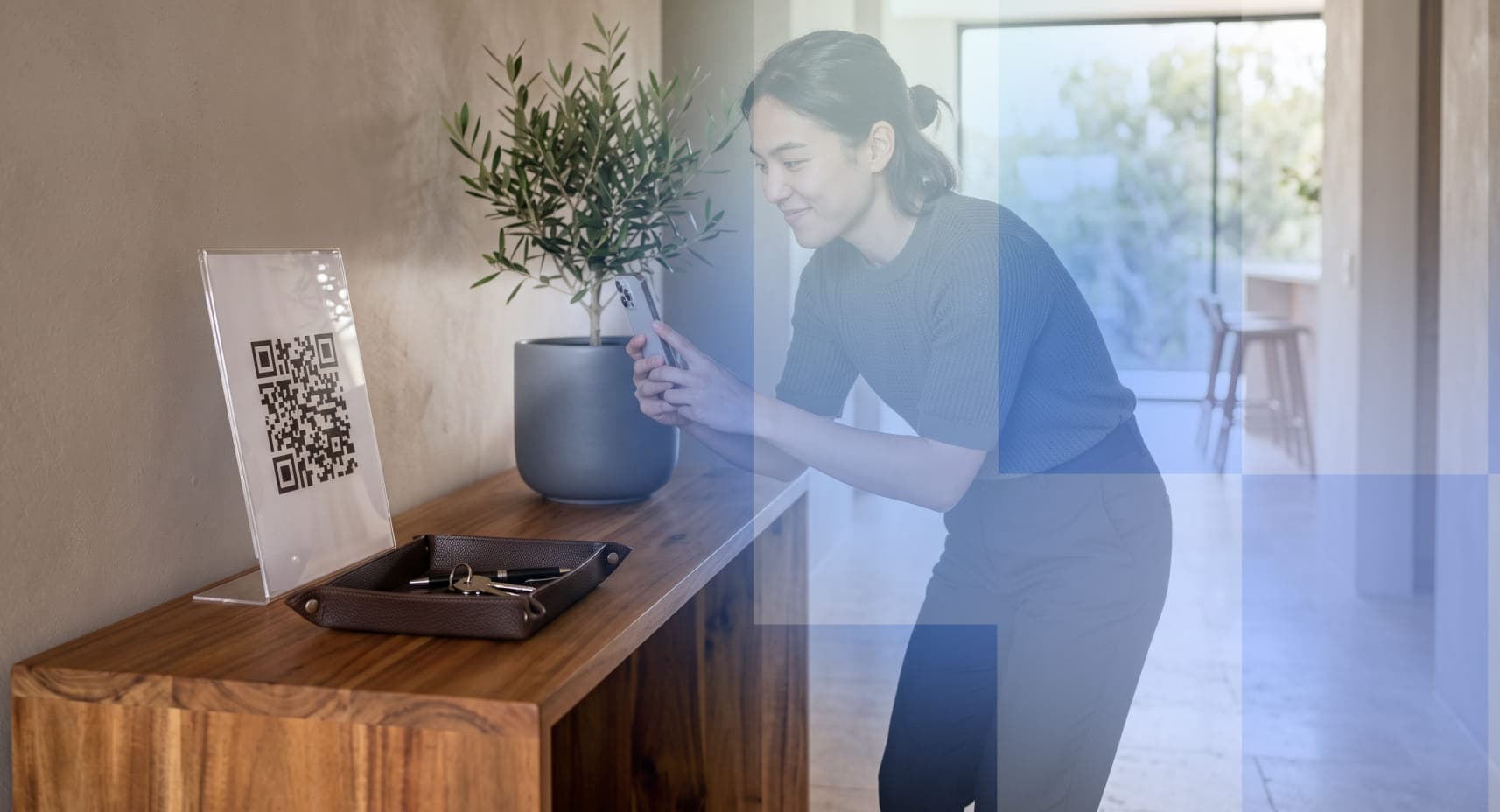
Put it on a printable Wi-Fi sign as well. A QR code taped inside a kitchen cabinet ends the question for good.
2. The door code
Access instructions belong to the check-in flow, not to the map. Airbnb keeps detailed check-in instructions hidden from the guest until 48 hours before arrival, which is its own reason to send your own message earlier.
The check-in instructions generator writes that message from the address, the access sequence and the keys.
3. How the place works
Thermostat, dishwasher, trash day, the light switch behind the door. None of it fits in a pin on a map, and all of it is what guests message about.
That material is the house manual, a text field in the arrival guide that Airbnb opens to guests once their reservation is confirmed. Our guide to the welcome book and house manual covers what goes in each.
4. Your co-host
This is the one that catches anyone managing more than one property. The same help page states it plainly: guidebooks are tied to an individual hosting account rather than to a listing, and home co-hosts cannot access new guidebooks.
Read that twice if you run properties for other people. The guidebook you build sits under your account. It does not travel with the listing when the arrangement changes, and the co-host you bring on cannot edit it.
One thing it does that surprises hosts
Host guidebooks are public. Airbnb says so directly: everyone can access them on Airbnb, not only your confirmed guests.
That changes what it is for. A guidebook is closer to a piece of your listing's marketing than to a private document, and anything you would only tell a paying guest does not belong in it. The gate code obviously. The neighbor's name, the spare key location, the fact that the building has no camera: also no.
It also means a good guidebook works before the booking. A traveler comparing two listings in the same neighborhood can read yours.
What to put in the Airbnb guidebook
Since the scope is the neighborhood, write for the guest standing outside your door with two hours and no plan.
Eight to twelve entries is enough. More than that reads as a directory and gets skipped.
- The coffee you would actually walk to, with the time it opens.
- One breakfast, one casual dinner, one place worth a reservation.
- The grocery store, and whether it closes early on Sunday.
- The pharmacy, and the nearest 24-hour one if there is one.
- The park, the beach access, or the walk with the view.
- The nearest transit stop and what it costs.
- One thing a tourist would never find.
- The thing to avoid, said kindly.
Write the last two yourself. Everything above them is on a hundred other guidebooks in your city, and the two that are yours are the reason a guest reads the rest.
An Airbnb guidebook is not a welcome book
Three words get used interchangeably and they name three different objects.
The guidebook is Airbnb's feature. Neighborhood, public, tied to your account.
The house manual is a field on the listing. Operational, visible to confirmed guests, text only as far as Airbnb documents it.
The welcome book is yours. It is not an Airbnb object at all. It holds everything in one place, and you can print it, host it yourself, or hand it to a guest who never opens a link.
Most hosts need all three, which sounds like work until you notice they come from the same eight answers. Fill in the welcome book template once and it produces the printable book and the house manual text as separate files. The recommendations you wrote for it are what goes into Airbnb's guidebook.
Rules are the fourth object and they live somewhere else again, in the listing, where the guest accepts them at booking. Our guide to Airbnb house rules covers what holds up and what does not.
Should you bother filling it in?
Yes, and it should take twenty minutes rather than an evening.
It is free, indexed on Airbnb, and visible to people still deciding. It is also one of the few surfaces where a host with a real opinion beats a management company with a template. What it will not do is reduce your messages, because the messages are about the thermostat.
Hosts running two to twenty units usually split the job. Airbnb's guidebook takes the neighborhood, and a digital guidebook of their own takes everything inside the property, in the guest's language, editable across every listing at once. That division is not a workaround. It follows the shape of what Airbnb built.
Frequently asked questions
What is an Airbnb guidebook?
It is an Airbnb feature where a host recommends local places: restaurants, stores, parks and attractions, pinned on a map. Airbnb describes its scope as places, neighborhoods and city advice. It does not cover the property itself.
Can I put the Wi-Fi password in my Airbnb guidebook?
You should not, and the guidebook has no field for it. Guidebooks are public on Airbnb, so anything in them is readable by people who have not booked. The Wi-Fi password belongs in the arrival guide and on a printed sign in the property.
Where is the Airbnb guidebook in my listing?
It is attached to your hosting account rather than to a single listing, which is why you edit it from your account rather than from the listing editor. Airbnb also states that home co-hosts do not have access to new guidebooks.
Is the Airbnb guidebook the same as a digital guidebook?
No. Airbnb's guidebook is a neighborhood recommendation feature. A digital guidebook, in the sense the industry uses it, is a hosted page covering the whole stay: access, Wi-Fi, appliances, rules and local tips together. The two coexist and serve different moments.
How many places should an Airbnb guidebook have?
Airbnb does not publish a minimum or a maximum. Eight to twelve entries is a practical range: enough to be useful, short enough to be read. A list of forty gets scrolled past.
Does the Airbnb guidebook reduce guest messages?
Not on its own, because guests message about the property rather than the neighborhood. The door code, the Wi-Fi, the thermostat and trash day are the four questions, and none of the four belongs in the guidebook.
Can I download my Airbnb guidebook as a PDF?
Airbnb's help page mentions printing copies for guests and sharing the guidebook outside the platform, but it does not document a PDF export. If you need a file to print or attach, build it in a welcome book template instead.
Alexandre Pidault
Founder of WonderGuest
I built the guest-experience tools for the FlexyLoc concierge service (digital guidebooks, interactive guides and videos) before launching WonderGuest. I write here about automating the guest experience in short-term rentals.
More about the author →A WiFi QR code is great.
A complete digital guidebook is even better.
Reduce guest messages and boost your 5-star reviews on Airbnb by centralizing all your property information in one place.
In 2 minutes with your Airbnb listing
Similar articles

Airbnb checkout instructions: what to ask, and what guests actually do
Airbnb makes your checkout instructions visible before booking. The five requests worth making, the ones that cost you a review, and a message to copy.

Airbnb Superhost requirements: the four numbers, and how hosts lose the badge
The four thresholds Airbnb checks every quarter, the one most hosts fail on, what the badge is worth, and the difference from Guest Favorite.
Airbnb hosting tips that change the numbers, from hosts who run 5 to 50 doors
Twelve hosting tips sorted by what they move: ratings, occupancy, revenue per stay, or hours per week. No decor advice, no clichés.