How to get more Airbnb bookings: 5 levers that actually drive visibility
Your Airbnb listing isn't getting views or bookings? Here are the 5 levers that truly drive visibility since the 2026 algorithm change, and how to fix each one.

Written by Alexandre Pidault
Founder of WonderGuest
Every week I talk with hosts and property managers who ask me the same question. Their place hasn't changed, their rates are still in line with the market, and yet their bookings are dropping. Most of them look for the answer in the wrong place, retouching a photo or changing a word in the title. The real issue is elsewhere. In 2026, Airbnb no longer ranks listings on how they look, but on a prediction: the probability that a guest books, then leaves five stars. The whole game of optimization comes down to that shift. Here are the five levers that genuinely make the difference, and why most hosts work on the wrong ones.
What changed in the Airbnb algorithm in 2026
Airbnb has always said the same thing about its fundamentals. According to Airbnb's help center, four criteria weigh most heavily in ranking: listing quality, popularity, price and location. Popularity is measured by guest interactions, that is how often the listing is booked, how many times it is saved to a wish list, and the messages sent to the host. Those principles haven't disappeared. What changed is their weighting.
At its professional host summit in San Francisco in October 2025, Airbnb shared an unusual level of detail about how search works. According to the write-up published by Rental Scale-Up, the algorithm now relies on more than 800 signals and focuses on two predictions: the probability that a guest books your place, and the probability that they have a good stay and leave a five-star review. On April 20, 2026, Airbnb formally acknowledged the existence of this recommendation system in its terms of service for the first time, confirming that results are personalized for each guest. Two people searching the same dates in the same place do not see the same listings.
This personalization changes your goal. The algorithm no longer looks for the best place in absolute terms, but the place best suited to the guest searching at that moment, based on their history, budget and preferences. A guest who often books with a pet sees pet-friendly places first; a business traveler sees those with a workspace. Trying to please everyone no longer works, you have to state clearly who your place is for. And because the algorithm follows the guest from the first view all the way to the final review, what happens during the stay matters at least as much as what attracts the click. Visibility is built from the bottom up, by securing the real experience first.
Three concrete consequences for you. First: the boost given to new listings has faded with the summer 2025 update. You no longer start with free visibility, you have to earn it from the very first booking. Second: the Guest Favorite badge has replaced Superhost status as the dominant quality signal. It rewards recent reviews, not seniority. Third, the most underestimated: the algorithm reads the text of your reviews and analyzes your photos, it doesn't just count stars. A place viewed a hundred times and booked twice will end up behind a place viewed fifty times and booked five times. Your job is no longer to fill in your listing, but to turn every visitor into a guest who books.
Why your Airbnb title is costing you clicks
In search results, the guest first sees your cover photo, your price and your title. It's on these three elements that they decide in a second whether to click or keep scrolling. The resulting click-through rate is a signal the algorithm watches. A title that doesn't trigger a click teaches the system that your listing isn't relevant for that search, and it shows you less often.
The problem is that most titles look alike. 'Lovely cosy and bright apartment' describes thousands of places and sets yours apart from none. Words like cosy, gorgeous, charming or pleasant carry no information. They take up space without giving a reason to click. A good title names a concrete benefit the guest can verify: '5 min walk from the station', 'south-facing terrace with a view', 'private parking included'. Aim for a length between 50 and 80 characters, and include at least one strong differentiator, your view, your neighborhood, your rarest amenity. The title isn't a slogan, it's a filter you hold out to the right guest.
How to write an Airbnb description that converts
The description is read before booking, never after. It's what lifts the last hesitations, and since 2025 the algorithm actually analyzes it, word by word. A three-line description that repeats 'you'll feel right at home' helps neither the guest nor the ranking.
Three reflexes change everything. First, length: aim for at least 500 characters, the threshold below which a description looks sloppy. Next, location: guests want to know where they're sleeping, how far from the center, near which transport, how many minutes from the beach or the station. It's often the criterion that decides the booking, and it's missing from most listings I read. Finally, the concrete: name two or three specific amenities in the opening lines, the ones visible before clicking 'read more'. Banish stock phrases like 'ideal for' or 'you'll love it'. Guests skim past them. A factual sentence, 'fully equipped kitchen with dishwasher and coffee machine', convinces ten times better than a superlative.
Which amenities to list so you don't disappear from Airbnb filters
Every amenity you don't list is a filtered search you lose. When a guest ticks 'free parking' or 'self check-in' in the filters, Airbnb only shows them the listings that ticked the same box. If you offer parking but forgot to declare it, you don't exist for that guest, even if your place is perfect for them.
Start with the essentials that condition the basic filters: wifi, a kitchen, bed linen, toiletries, a television. Then add your real differentiators, parking, terrace or balcony, pool, garden. Self check-in deserves a special mention. Many guests filter on it because they arrive late or don't want to depend on an appointment. If you offer a lockbox or a smart lock and don't declare it, you cut yourself off from a significant share of demand. A simple rule: declare everything you genuinely have, and only what you genuinely have. An amenity advertised then missing on arrival is paid for in a negative review, and a negative review costs far more than an unticked box.
Why your ratings and reviews matter more than ever
If I had to keep just one lever, it would be this one. With the Guest Favorite badge, Airbnb has made recent reviews the number one quality signal. And since the algorithm reads the content of reviews, a string of detailed, enthusiastic comments from the last few months is worth far more than a pile of old generic 'great place' notes.
Airbnb has also made this hierarchy visible to guests. Since 2024, the platform displays a marker for places in the Top 10%, 5% or 1% of their market, and it just as publicly flags the lowest-rated 10%, right above the reviews. A guest who comes across that negative label moves on before even reading your description. Your rating is therefore no longer a mere signal sent to the algorithm, it's a selling point or a deterrent displayed in plain sight on your page.
Two sub-ratings deserve all your attention, because they are the most actionable. Cleanliness first: Airbnb presents it as the most important criterion among the six on which a guest rates their stay. A guest who pays a cleaning fee expects a flawless place, and the slightest gap shows in the score. Review volume next: below five or six reviews, a guest hesitates to book, for lack of social proof. For your first stays, ask people close to you to build that base. But the two sub-ratings I most often see drag a listing down are neither cleanliness nor value for money. They are check-in and communication. And those depend less on your place than on the way you welcome your guests.
Why an active Airbnb listing ranks better than a dormant one
The 2026 algorithm rewards recent activity more than history. A listing that hasn't moved in months, frozen calendar, same photos, slow replies, slides gently downward, even with excellent reviews from last year. Conversely, a living listing climbs. Updating your calendar, replying quickly to messages, seeing your place saved to wish lists, all of this tells Airbnb that your listing is active and desirable.
Two concrete moves follow. Refresh your cover photo with the seasons, a sunny terrace in spring, a warm interior in winter, to match the intent of the guest of the moment and signal that the listing is alive. And treat your recent reviews as your absolute priority, since the algorithm favors the last thirty to sixty days. Resting on a good track record no longer protects you if your latest comments are lukewarm.
How guest welcome shapes your Airbnb rating
This is the least worked lever on the market, by far. A guest who can't find the wifi code, who's looking for how the heating works, or who doesn't know where to take out the trash sends you a message. Multiply that across all your stays, and you get the flow of repetitive questions every property manager knows. Each of these frictions chips away at the communication rating, and sometimes the check-in rating when the entry instructions are confusing.
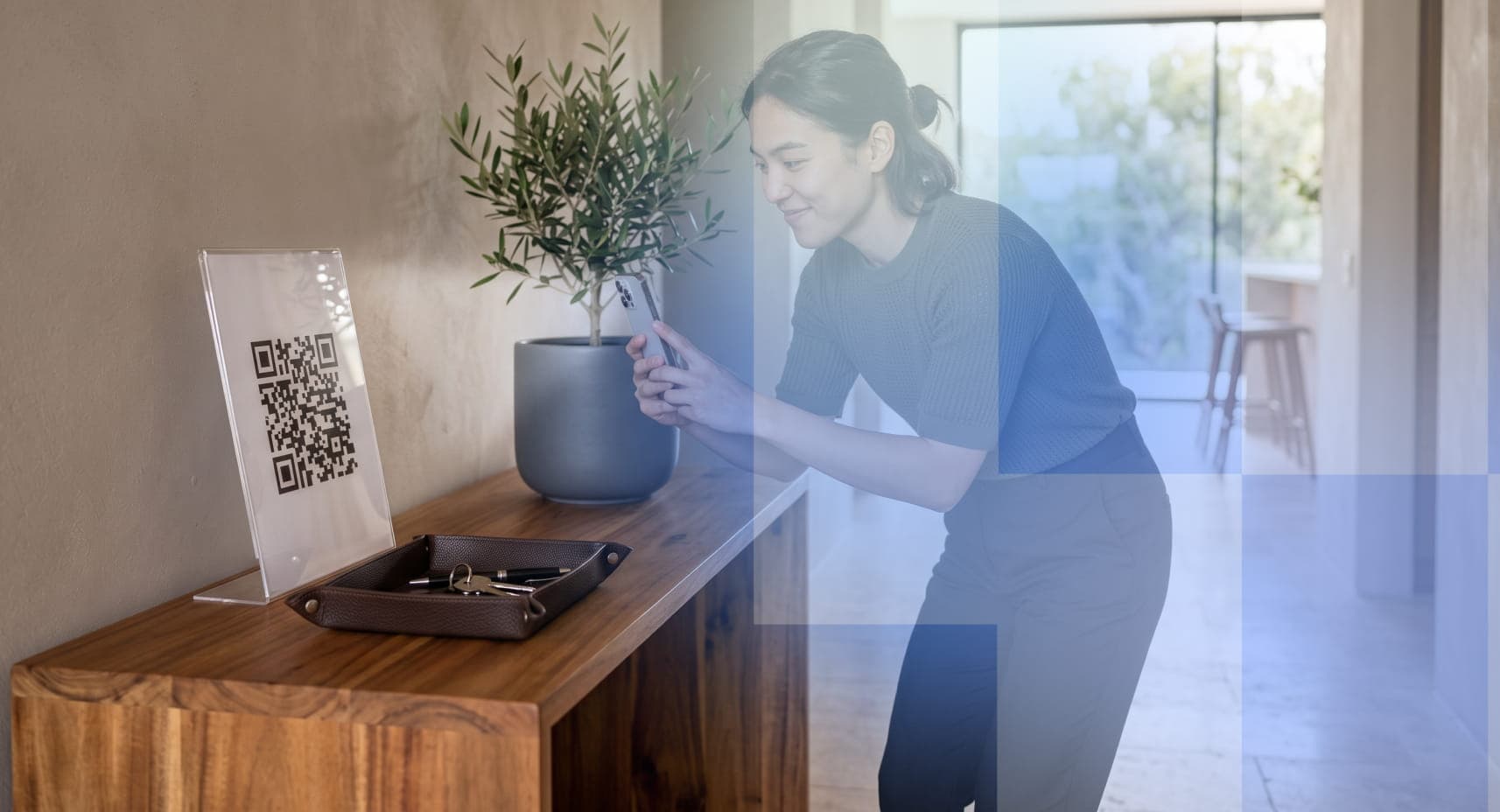
This is exactly the problem I set out to solve when I built WonderGuest. A digital welcome guide brings together in one place the wifi code, arrival instructions, how the equipment works, the house rules and your neighborhood recommendations. The guest accesses it by scanning a QR code, with no app to install. In the exchanges I have with hosts who use it, the volume of repetitive messages drops sharply, and the check-in and communication sub-ratings rise right behind. Add a translation of the guide into the guest's language, and you remove the last source of misunderstanding for an international clientele. Welcome is not a comfort detail. It's a ranking sub-criterion you fully control, unlike your competitors' prices or the weather of bookings.
The stakes go beyond the rating. Airbnb now grants a visibility bonus to hosts who bring the same guest back for a second stay, a way to discourage direct bookings off the platform. And a well-welcomed guest is a guest who returns. Polishing the in-home experience therefore feeds two levers at once, your check-in and communication sub-ratings, and that loyalty bonus that pushes your listing up.
Where to start in practice
The worst mistake would be to redo everything at once. A listing that underperforms rarely has five serious problems, it has two or three that drag down the rest. The right reflex is to measure before correcting. Spot your two weakest links, fix them first, and let the algorithm react before touching the rest, since it now weights recent signals more than history.
Identify the criterion costing you the most clicks or bookings, title, description, amenities, reviews or welcome, and focus your time there before touching the rest. Once your two weak points are fixed, the experience you offer in the home becomes your best ranking lever. If you want to tackle guest welcome right now, you can create your digital welcome guide in a few minutes.
Frequently asked questions
How long does it take to climb back up the Airbnb algorithm?
There's no guaranteed timeframe, but the 2026 algorithm weights recent signals more heavily than history. A fix that improves your click-through rate or your rating therefore shows up faster than before. Count a few weeks of stays for new reviews and a better booking rate to shift your ranking, provided you don't change everything at once, which would make the effect impossible to read.
How do you get the Guest Favorite badge?
This badge rewards a cluster of recent reviews and high ratings, particularly on cleanliness, listing accuracy and check-in. In practice, you earn it by delivering friction-free stays consistently, not by collecting an old reserve of five stars. That's exactly why a polished guest welcome, which lifts your check-in and communication sub-ratings, is a shortcut to this badge.
Should you lower your prices to rank better on Airbnb?
Price matters, Airbnb's help center confirms it, but it's judged relatively, against comparable places on your dates, not in absolute terms. Slashing your rate won't move you up if your photos, reviews or title are weak. Align your listing with the levers described above first. Price becomes a fine adjustment, not a patch to compensate for a poorly optimized listing.
Sources
- Airbnb, Help Center, How search results work (official ranking criteria: quality, popularity, price, location).
- Rental Scale-Up, report from the Airbnb professional host summit, October 2025 (800 signals, dual prediction of booking and five-star review).
- Beyond Booking, analysis of the 2026 Airbnb algorithm updates (April 20, 2026 terms-of-service update, personalized results, value placed on returning guests).
- Airbnb, Top 1%, 5%, 10% and bottom 10% highlight system (public display of market ranking).
- Sébastien MORE, video breakdown of the 2026 Airbnb algorithm (a short-term-rental specialist's summary of recent changes).
Alexandre Pidault, founder of WonderGuest, a digital welcome guide platform for short-term rental hosts and property managers.
Alexandre Pidault
Founder of WonderGuest
I built the guest-experience tools for the FlexyLoc concierge service (digital guidebooks, interactive guides and videos) before launching WonderGuest. I write here about automating the guest experience in short-term rentals.
More about the author →A WiFi QR code is great.
A complete digital guidebook is even better.
Reduce guest messages and boost your 5-star reviews on Airbnb by centralizing all your property information in one place.
In 2 minutes with your Airbnb listing
Similar articles
Airbnb guidebook: what it covers, and the four things it leaves out
Airbnb guidebooks cover the neighborhood, not your property. The four things the feature leaves out, and where each one actually belongs.

Airbnb checkout instructions: what to ask, and what guests actually do
Airbnb makes your checkout instructions visible before booking. The five requests worth making, the ones that cost you a review, and a message to copy.

Airbnb Superhost requirements: the four numbers, and how hosts lose the badge
The four thresholds Airbnb checks every quarter, the one most hosts fail on, what the badge is worth, and the difference from Guest Favorite.